What Is the Difference Between Local and Organic SEO?

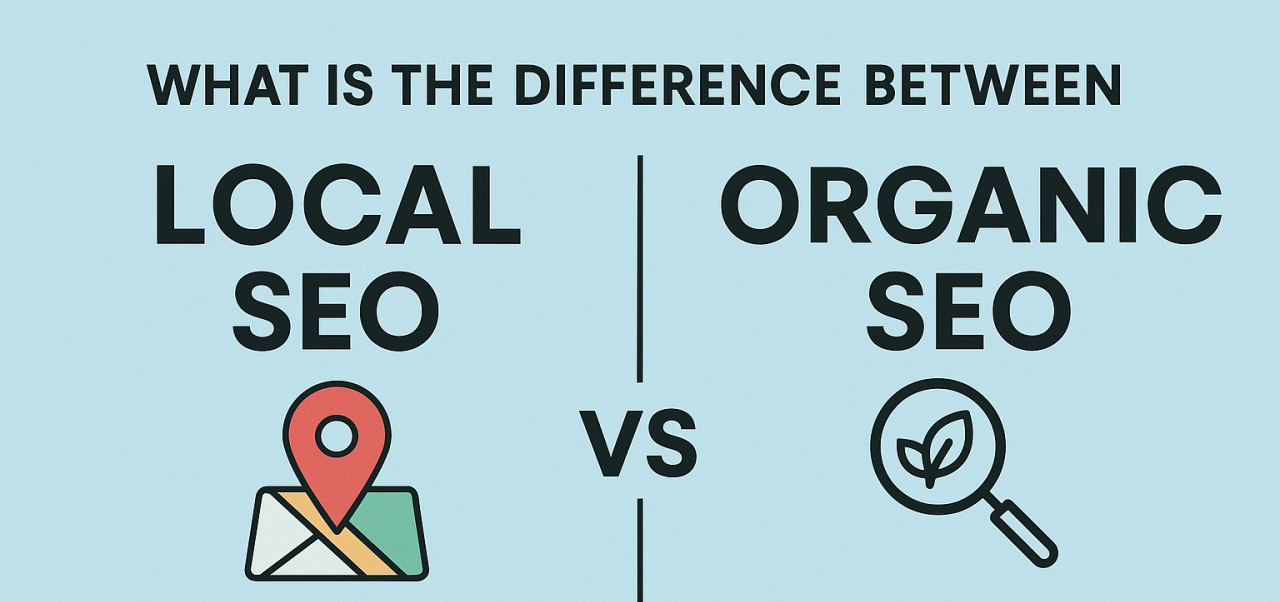
In the vast world of search engine optimization (SEO), there are various strategies that can help your website rank higher on search engines like Google. Two terms you might come across often are Local SEO and Organic SEO. Both aim to improve the visibility of a website, but they each work in different ways. Understanding the difference between local and organic SEO is essential for optimizing your website and targeting the right audience.
In this blog post, we’ll dive deep into the difference between local and organic SEO, helping you understand what each type is, how they work, and why both are important for businesses today. We’ll also highlight the key things to look for, why you should use them, and how you can apply these techniques to boost your website’s performance. Whether you’re just starting out or looking to refine your strategy, you’ll find valuable insights here.

What Is Local SEO?
Local SEO is a branch of search engine optimization focused on improving the visibility of a business within a specific geographical area. Think about when you search for terms like “best coffee shop near me” or “plumbers in [city name].” Local SEO is what helps businesses show up in search results based on location. It involves optimizing a website’s presence to appear in local search results, particularly in Google’s “Local Pack,” which is the section of search results that shows businesses close to the searcher’s location.
Key Components of Local SEO
- Google My Business (GMB) Optimization: Setting up and optimizing your business profile on Google, ensuring accurate business name, address, phone number (NAP), and other information.
- Local Citations: Ensuring your business is listed in local online directories.
- Customer Reviews: Getting positive reviews on platforms like Google and Yelp.
- Local Keywords: Including location-specific keywords in your content to target users in your area.
Local SEO is perfect for businesses that want to target potential customers who are nearby and likely to visit their physical store or contact them for services.
What Is Organic SEO?
Organic SEO refers to strategies used to improve the ranking of your website in non-local search results. It’s focused on achieving a higher ranking for broader, non-location-based keywords. For example, if you run a website selling online courses, “online courses” is an organic keyword that could help your business rank higher in search engines.
Organic SEO does not rely on proximity, but rather focuses on factors like relevance, authority, and content quality to improve rankings in the regular (non-local) search results. It’s about making your website visible to users across a wider region (or globally), not just within a specific geographic area.
Key Components of Organic SEO
- On-Page Optimization: Optimizing your website’s content, meta tags, images, and URL structure for better search engine visibility.
- Content Creation: Creating high-quality content that satisfies the search intent and is valuable to users.
- Backlinks: Acquiring links from reputable websites to build your website’s authority.
- Keyword Research: Identifying the most relevant and high-volume keywords that potential customers might use to find your website.
Unlike local SEO, organic SEO focuses on broad search results and aims to attract visitors from a larger geographical area, including international traffic.
A Tale of Two Businesses: Local SEO and Organic SEO in Practice
Numbers explain a lot, but a side-by-side example makes the difference between local and organic SEO click faster than any definition. Picture a family-owned plumbing company in Austin and a solo course creator who teaches online spreadsheet skills. Both want more traffic. Both need SEO. But the playbook for each looks almost nothing alike.
The plumbing company lives and dies by proximity. Nobody in Denver is going to hire a plumber based in Austin, so ranking for generic terms like “plumbing services” would be close to worthless even if it were achievable. What actually moves the needle is showing up in the Local Pack for “emergency plumber Austin” or “water heater repair near me,” having a Google Business Profile stacked with recent reviews, and making sure the business name, address, and phone number match exactly across every directory listing. Within a few months of tightening up citations and asking happy customers to leave reviews, this kind of business typically sees a jump in phone calls that on-page blog content alone would never deliver.
The course creator has the opposite problem. Her customers could be anywhere with an internet connection, so location-based optimization does nothing for her. Her growth depends on ranking for terms like “how to build a pivot table” or “spreadsheet automation for beginners,” publishing tutorials that actually answer those questions in depth, and earning links from productivity blogs and YouTube descriptions that reference her guides. Her SEO timeline is longer and more content-heavy, but the payoff compounds: a single well-ranked tutorial can keep bringing in students for years without ongoing local citation maintenance.
The lesson isn’t that one approach beats the other. It’s that mismatching your strategy to your business model wastes months of effort. A location-bound business chasing broad organic keywords is fighting an uphill battle against companies with national budgets. A location-independent business obsessing over GMB categories is optimizing for searches its customers will never make.
What to Look for When Deciding Based on the Difference Between Local and Organic SEO
When choosing between local and organic SEO, there are several factors to consider. It’s not always about choosing one over the other, as many businesses can benefit from using both strategies. But understanding the key differences will help you decide where to focus your efforts.
Key Considerations
- Business Location: If your business is location-based (like a restaurant, store, or service provider), Local SEO is a must. If your business operates online and serves a broader audience, Organic SEO will be more beneficial.
- Search Intent: Are your customers searching for local solutions or looking for information from businesses worldwide? Local SEO is great for targeting “near me” searches, while Organic SEO works better for general search terms.
- Competition: How competitive is your market? In highly competitive industries, Organic SEO might take more time to yield results, whereas Local SEO can sometimes offer quicker visibility if done correctly.
Why Use Local SEO?
Local SEO is incredibly important for businesses that have a physical presence and cater to customers in a specific location. Here’s why it’s crucial:
Key Benefits of Local SEO
- Increase Local Visibility: Local SEO helps your business show up in searches that involve your specific geographic location. This means people in your area are more likely to discover your business when they search for relevant services or products.
- Mobile Search: With the increasing use of smartphones, more people are searching for local businesses on-the-go. Local SEO ensures that your business appears in relevant mobile search results.
- Google’s Local Pack: Ranking in Google’s Local Pack (the map listing with business information) is a powerful way to attract customers. It helps improve your credibility and leads to more website visits or foot traffic to your store.
Why Use Organic SEO?
While Local SEO targets local searches, Organic SEO plays a pivotal role in attracting a global audience. Here’s why Organic SEO is important:
Key Benefits of Organic SEO
- Wider Reach: Organic SEO allows you to rank for broader search terms, which means you can attract traffic from all over the world, not just your local area.
- Brand Authority: High-quality content and backlinks help build your brand’s authority and credibility, positioning you as an expert in your field.
- Long-Term Strategy: Organic SEO takes time to build, but the results are often long-lasting. Once you establish your website’s authority and ranking, you can maintain traffic with less effort.
How to Use Local SEO to Boost Your Business
To make the most out of local SEO, you’ll need to implement a few key strategies. Here’s how to get started:
Step-by-Step Guide to Local SEO
- Claim and Optimize Your Google My Business Profile: This is one of the first things you need to do to improve your local SEO. Ensure your profile is fully filled out with accurate business information.
- Encourage Customer Reviews: Ask satisfied customers to leave positive reviews on Google, Yelp, and other local review platforms. These reviews help improve your credibility and rank higher in local searches.
- Use Location-Based Keywords: Incorporate keywords that include your city or neighborhood in your website content, blog posts, and meta tags.
- Get Listed in Local Directories: Make sure your business is listed in important local directories, such as Yelp, Yellow Pages, or other niche-specific platforms.
- Optimize for Mobile: Many local searches come from mobile devices. Ensure your website is mobile-friendly and loads quickly to improve user experience.
How to Use Organic SEO for Long-Term Growth
To succeed with organic SEO, you need to take a more comprehensive approach to your website’s optimization. Here’s how to get started:
Step-by-Step Guide to Organic SEO
- Create High-Quality Content: Content is king in Organic SEO. Produce valuable, informative, and engaging content that answers your audience’s questions.
- Optimize On-Page SEO: Focus on optimizing your website’s meta descriptions, title tags, headers, and internal linking to ensure Google understands your content.
- Build Backlinks: Gain backlinks from high-authority websites to improve your website’s domain authority and increase your chances of ranking higher.
- Conduct Keyword Research: Use tools like Google Keyword Planner, SEMrush, or Ahrefs to find the right keywords for your industry and target audience.
- Focus on User Experience: Make sure your website is easy to navigate, loads quickly, and provides a smooth user experience.
Common Mistakes Businesses Make With Local and Organic SEO
Even with a solid understanding of the difference between local and organic SEO, it’s easy to trip over the same handful of mistakes. Watching out for these can save months of wasted effort.
- Treating them as interchangeable. A landscaping company that pours its budget into national blog content while ignoring its Google Business Profile is solving the wrong problem. If most revenue comes from a 20-mile radius, local signals deserve first priority.
- Inconsistent NAP data. A business name that reads “Smith & Sons Plumbing LLC” on the website but “Smith and Sons Plumbing” on Yelp confuses Google’s local algorithm and can quietly suppress Local Pack rankings for months before anyone notices.
- Keyword-stuffing city names. Cramming “Chicago” into every other sentence of a homepage reads as spammy to both readers and search engines. A handful of natural mentions, paired with genuinely local content like neighborhood guides or service-area pages, works far better.
- Ignoring reviews after they come in. Collecting reviews is only half the job. Businesses that never respond to reviews, especially negative ones, miss a trust signal that both customers and Google’s algorithm notice.
- Chasing organic keywords with no search volume. Ranking first for a phrase nobody searches is a hollow win. Always check search volume and intent before committing weeks of content production to a keyword.
- Expecting organic SEO results overnight. Organic rankings for competitive, non-local terms often take three to six months of consistent publishing and link building before meaningful traffic shows up. Businesses that abandon the strategy after six weeks rarely see the payoff.
How to Measure Success for Each Strategy
Local and organic SEO succeed on different scoreboards, so tracking the wrong metric for the wrong strategy leads to false conclusions about what’s working.
For local SEO, watch your Google Business Profile insights: how many people called directly from your listing, requested directions, or visited your website after finding you in the Local Pack. Rank tracking for “near me” and city-specific keywords matters too, but phone calls and direction requests are the metrics that actually correlate with revenue for most local businesses.
For organic SEO, the more useful signals are organic traffic growth over time, keyword rankings across a broader set of non-branded terms, average time on page, and the number of referring domains linking back to your content. Because organic SEO plays a longer game, it’s worth reviewing these numbers monthly rather than expecting weekly movement.
Frequently Asked Questions
Can a business use both local and organic SEO at the same time?
Yes, and most established businesses eventually do. A regional accounting firm, for example, might run local SEO to win nearby clients searching “tax accountant near me” while also publishing organic content on broader topics like “how to file quarterly taxes” to attract remote clients and build authority.
Which one is cheaper to start with?
Local SEO is usually cheaper and faster to see initial movement on, since claiming a Google Business Profile and cleaning up citations costs little beyond time. Organic SEO tends to require a bigger investment in content production and link building before it pays off.
Does organic SEO still matter if I only serve a local area?
It can. Ranking organically for informational questions your local customers search, like “how often should I service my HVAC unit,” builds trust before they ever search for a provider near them, which can improve conversion rates once they do search locally.
How long does it take to see results from local SEO?
Many businesses notice movement in Local Pack visibility within four to eight weeks of cleaning up their Google Business Profile and citations, though highly competitive cities and categories can take longer.
What’s the biggest difference in how Google evaluates each?
Local SEO weighs proximity, relevance, and prominence (things like reviews and citations) heavily. Organic SEO weighs content quality, backlink authority, and topical relevance more heavily, with location playing little to no role.
Do I need a physical storefront to benefit from local SEO?
No. Service-area businesses like plumbers, electricians, or mobile pet groomers can still rank in the Local Pack even without a walk-in storefront, as long as they set up their Google Business Profile as a service-area business and list the regions they cover.
Should a multi-location business run local SEO for every location separately?
Generally yes. Each location typically needs its own Google Business Profile, its own location-specific landing page, and its own set of local citations. Trying to rank one generic page for every city a business serves rarely works, since Google favors listings and pages that clearly correspond to a single physical or service area.
Choosing the Right SEO Strategy for Your Business
Understanding the difference between local and organic SEO is crucial for businesses looking to expand their online presence. If you’re a local business, optimizing for local SEO can help you capture the attention of customers in your area, while Organic SEO is key for reaching a broader audience globally. Both strategies work hand in hand to increase your website’s visibility and drive traffic, but they have different focuses and require distinct approaches.
By knowing what each type of SEO entails and how to apply them to your website, you’ll be better equipped to achieve your business goals. Whether you’re focusing on local search results or aiming for global visibility, leveraging the power of both Local and Organic SEO can help you maximize your online potential.
For local businesses, services like WooSellServices can help you optimize your website and boost your local SEO efforts, ensuring you stay ahead in the competitive digital landscape.
Interesting Reads:
Local SEO Citations That Help You Rank Higher and Gain Customer Trust
Local SEO for Small Business to Get Found Fast and Grow Locally