What Is SEO and Why It Matters

If you’ve ever searched for something online and clicked one of the first results without a second thought, you’ve already experienced SEO doing its job. You didn’t notice it. That’s the point. Good search engine optimization is invisible to the person benefiting from it and painfully visible to the business trying to build it.
SEO stands for Search Engine Optimization. In plain terms, it’s the ongoing work of making your website easier for Google, Bing, and other search engines to find, understand, and trust, so that when someone searches for something your business can help with, your page shows up.
That last part matters more than most explanations give it credit for. SEO isn’t about tricking an algorithm. It’s about removing the friction between a person with a question and a page that answers it well.
Why “Just Getting Traffic” Isn’t the Goal
A lot of businesses chase traffic numbers and wonder why revenue doesn’t follow. The problem is usually intent, not volume. A thousand visitors who stumbled onto your blog post from an unrelated search convert at close to zero. A hundred visitors who typed the exact question your product answers convert at a rate that actually moves the needle.
SEO done right optimizes for the second group. The people who find you through search are, almost by definition, already interested in the topic. Nobody accidentally searches “best project management software for a five-person agency.” When that person lands on your page, they’re not cold traffic. They’re most of the way to a decision already.
This is what makes organic search different from most other acquisition channels. You’re not interrupting someone’s day with an ad. You’re answering a question they already asked.
The Three Components That Make Up SEO
Ask ten SEO practitioners to define the discipline and you’ll get ten slightly different answers, but nearly all of them boil down to the same three moving parts.
On-Page SEO
Everything within your control on the page itself: your content, your keyword usage, your headings, your internal links, your meta tags. This is where most beginners start, and for good reason, since it’s the part you have full authority over without waiting on anyone else. A full breakdown of tactics lives in our On-Page SEO guide.
Off-Page SEO
Everything that happens away from your site that still shapes how search engines perceive it, backlinks chief among them. When another credible site links to yours, that’s treated as a vote of confidence. We go deep on how to earn those in Off-Page SEO Strategies That Work.
Technical SEO
The infrastructure layer. Site speed, mobile responsiveness, crawlability, security. None of it is visible to a typical visitor, but all of it determines whether search engines can even access your content in the first place. See Technical SEO Made Simple for the specifics.
None of these three operate in isolation. Brilliant content with a slow, uncrawlable site rarely ranks. A technically flawless site with thin content doesn’t either. The businesses that win at SEO treat all three as one connected system, not three separate checkboxes.
How Long Does SEO Actually Take?
Here’s the honest answer nobody wants: it depends on your starting point, your competition, and how consistently you invest in it. A brand new site in a competitive niche might need six months to a year before search traffic becomes meaningful. An established site adding SEO discipline to content it’s already publishing can see movement in weeks.
What’s consistent across almost every case is the shape of the curve. Slow at first, then compounding. Month one rarely looks different from month zero. Month nine often looks dramatically different from month six, because search engines need repeated signals of quality and relevance before they extend real trust to a page.
This is the single biggest reason SEO gets abandoned prematurely. Businesses invest for six weeks, see modest results, and pull the budget right before the compounding starts to show.
Common Myths That Waste Time and Money
“SEO is just about keywords.” Keywords matter for understanding what people search for, but stuffing them into content unnaturally does more harm than good today. Modern search engines evaluate meaning and context, not just word matches.
“More backlinks always means better rankings.” Quality beats quantity by a wide margin. A single link from a respected, relevant source outweighs dozens from low-quality directories, and the low-quality links can actively hurt you.
“SEO is a one-time project.” Search engines update their algorithms constantly, competitors publish new content, and user expectations shift. Treating SEO as a task you finish rather than a practice you maintain is the fastest way to watch hard-earned rankings slide backward.
“Paid ads make SEO unnecessary.” Ads stop the moment the budget runs out. Organic rankings, once established, keep generating traffic at close to zero marginal cost. The two work best together, not as substitutes.
Why SEO Matters More Than Ever
Search behavior has only grown more central to how people make decisions, not less. Before booking a service, people search reviews. Before buying a product, people search comparisons. Before trusting a business they’ve never heard of, people search the business name itself, looking for a credible presence.
Ranking well signals something beyond visibility. It signals that Google, after evaluating millions of competing pages, decided yours was worth showing. Visitors extend some of that borrowed trust to you before they’ve even read a word of your content.
SEO also compounds in a way most marketing spend doesn’t. A well-optimized page published two years ago can still be pulling in traffic today, with no ongoing spend required to keep it working. Try saying that about a paid campaign that stopped the day the budget did.
SEO Compared to Other Marketing Channels
Paid search puts you at the top instantly. The trade-off is that you’re renting the position. Stop paying, and the traffic disappears the same day, sometimes within hours.
Social media builds relationships and can move fast when something goes viral, but reach is largely controlled by a platform’s algorithm, and a single policy change can cut your visibility overnight regardless of how good your content is.
Email marketing is arguably the closest cousin to SEO in terms of long-term value. Both build an asset you own. The difference is that email requires someone to have already found you and opted in, while SEO is often how they find you in the first place.
None of this means pick one channel and ignore the rest. It means understanding what each channel is actually good at. SEO is good at capturing demand that already exists. It’s a poor tool for creating demand that doesn’t exist yet, which is closer to what paid ads and content marketing on social platforms do well.
Small Business SEO Versus Enterprise SEO
A local plumbing company and a national software company are technically doing the same discipline, but the day-to-day work looks almost unrecognizable between them.
A small, local business usually gets more value per hour spent on Google Business Profile optimization, local citations, and a handful of well-written service pages than it does chasing broad national keywords it has no real shot at ranking for against established competitors. Local SEO is a different enough discipline that it deserves its own dedicated attention rather than being treated as a footnote to general SEO.
An enterprise site, by contrast, is usually fighting a different battle entirely: thousands of pages, legacy technical debt, multiple teams publishing content without coordination, and a review process that can turn a two-hour fix into a six-week project. The technical and organizational challenges dwarf the keyword research challenges at that scale.
If you’re a small business reading generic SEO advice written with enterprise assumptions baked in, a lot of it will feel irrelevant. Scale the advice to your actual size before applying it.
How Search Engines Actually Decide What to Show
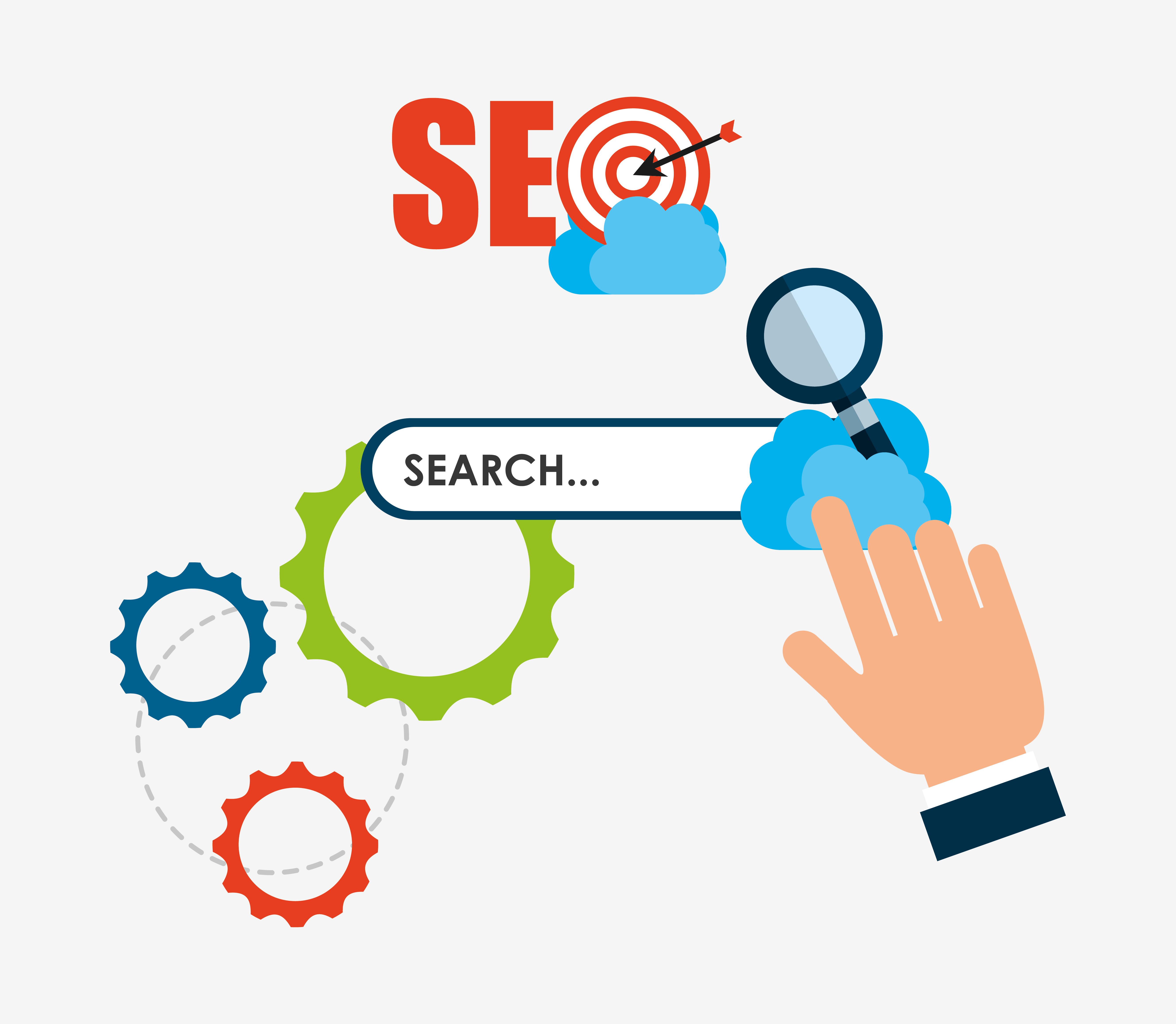
Behind every search result is a three-step process running constantly and invisibly. First, crawling: automated bots follow links across the web, discovering new and updated pages. Second, indexing: the content of those pages gets analyzed and stored in a massive database, essentially a library catalog of the internet. Third, ranking: when someone searches, the engine pulls the most relevant, trustworthy, well-structured matches from that index and orders them.
Hundreds of signals feed into that third step. Relevance to the query. Page quality and depth. Site speed and mobile usability. The strength and relevance of backlinks. User behavior signals like whether people who click through actually stay and read, or bounce straight back to the results page.
No single signal decides a ranking on its own. That’s precisely why chasing one tactic, like keyword density or backlink volume, in isolation tends to underperform a broader strategy that improves multiple signals at once.
A Short Example: How One Page Actually Ranked
Picture a small accounting firm with a page titled “Tax Services” and three vague paragraphs about “comprehensive solutions.” It wasn’t ranking for anything useful, unsurprisingly, since nobody searches “comprehensive solutions.”
The rewrite started with research into what people in that firm’s city actually typed into Google: “small business tax preparation,” “quarterly tax filing help,” “tax accountant for freelancers.” The page got restructured around those actual questions, with a clear heading for each, specific answers rather than vague promises, and a short section addressing pricing since that’s what almost every visitor was quietly wondering about anyway.
Three internal links from related blog posts pointed to the page. The meta title changed from “Tax Services | Firm Name” to something that actually named the service and the audience. Nothing about the change involved tricks or shortcuts. It involved answering the actual question better than the pages currently ranking.
Four months later, the page ranked on the first page for two of the three target phrases. Nothing dramatic happened in month one. The movement showed up gradually, then more noticeably, once the page had enough time to accumulate trust signals.
A Simple Starting Checklist
If you’re beginning from zero, resist the urge to tackle everything at once. Start narrow.
- Pick one page, ideally your highest-intent service or product page, and make sure the title tag and headings clearly describe what it offers.
- Check that the page loads quickly and works properly on a phone.
- Write or rewrite the content to directly and thoroughly answer the question someone searching for that topic would have.
- Add two or three internal links from other relevant pages on your site pointing to it.
- Submit your sitemap to Google Search Console if you haven’t already, so Google knows the page exists.
Do that for one page, watch what happens over the following months, and repeat the process for the next page. It’s slower than trying to optimize an entire site overnight, but it’s the approach that actually sticks.
Signs Your SEO Effort Isn’t Working
Traffic that’s flat month over month despite regular publishing is the clearest signal something’s off. It usually means content is going up without a clear target keyword in mind, or without any internal linking connecting it back to pages that matter.
High traffic with almost no inquiries or sales is a second warning sign, and a different problem entirely. That pattern usually points to a mismatch between what the content promises and what the business actually sells, or content ranking for informational searches that were never going to convert.
Rankings that spike briefly after publishing and then quietly fall away within a few weeks often indicate thin or unoriginal content. Search engines will test a fresh page in the results temporarily, then settle it into a lower position once user behavior and competing pages get factored back in.
A site that used to rank well and is now sliding, with no obvious cause, is worth a technical audit. Broken links, slow page speed creeping up over time, or a recent site redesign that accidentally changed URLs without proper redirects are common, boring, entirely fixable culprits.
SEO Terms Worth Knowing
A short glossary saves a lot of confusion later. SERP is the search engine results page, the list you see after searching. Organic traffic refers to visitors who arrive through unpaid search results, as opposed to paid ads. Crawling is the process search engines use to discover pages. Indexing is storing a page in the search engine’s database so it’s eligible to show up in results. Ranking is where a page appears in the results for a given query, with position one being the most visible.
Knowing these terms doesn’t make you an SEO expert, but it does mean you can read an analytics report or a consultant’s proposal without nodding along to jargon you don’t actually understand.
A couple more come up often enough to be worth learning early. Bounce rate measures how often a visitor leaves after viewing just one page, which can signal a content or expectation mismatch when it runs high. Domain authority, despite the name, isn’t an official Google metric, it’s a third-party estimate of a site’s overall backlink strength, useful as a rough comparison tool but not something to chase for its own sake. Anchor text is the clickable words in a hyperlink, and its relevance to the linked page is one of many small signals search engines weigh.
Frequently Asked Questions
Is SEO still relevant with AI search tools growing?
Yes, and arguably more so. AI-generated answers still draw heavily on well-structured, trustworthy, well-ranked content. Sites that were never findable by traditional search rarely get pulled into AI answers either. The fundamentals overlap more than they diverge.
How much should a small business budget for SEO?
It varies widely by competition and goals, but consistency matters more than raw budget size. A modest, sustained monthly investment in content and technical upkeep outperforms a large one-time push followed by months of neglect.
Can I do SEO myself without hiring an agency?
For the basics, yes. On-page fundamentals and simple technical fixes are learnable. Competitive niches with aggressive rivals often benefit from specialized help, particularly on the off-page and technical sides.
What’s the fastest way to see SEO results?
Optimizing existing pages that already rank somewhere on page two or three of search results, rather than starting from nothing, tends to produce the quickest visible movement.
Does SEO work the same way for every industry?
No. A heavily regulated field like healthcare or finance faces stricter content quality expectations, since search engines apply extra scrutiny to topics that can affect someone’s health, safety, or money. A niche B2B service might have very low search volume but extremely high intent per search, which changes the whole strategy from chasing traffic to chasing precision.
What happens if I stop doing SEO after reaching page one?
Rankings earned through real content and technical quality tend to be more durable than rankings gained through shortcuts, but “durable” isn’t “permanent.” Competitors keep publishing, algorithms keep updating, and a page left completely untouched for years often drifts down as fresher, better-maintained content overtakes it.
Interesting Reads