What Kind of Online Services Business We Can Offer with WooCommerce?


WooCommerce built its reputation on physical products, but a large share of what actually gets sold through it today isn’t a shippable object at all, and that shift has been quietly reshaping how the plugin gets used well beyond its original brief. Consultants, designers, developers, coaches, and agencies run entire businesses through WooCommerce without ever touching a shipping label. The trick isn’t whether WooCommerce can technically do it, it can, it’s understanding what actually needs to change from the default product-selling setup to make a service business run smoothly rather than feel like a workaround. Here’s the practical list of what kinds of service businesses fit, and what actually has to be configured differently to make them work.
Why Services Don’t Fit the Default WooCommerce Model Cleanly
A physical product has a fixed, knowable shape: it has weight, dimensions, a stock count, a shipping cost. A service has almost none of that. It has scope instead of dimensions, availability instead of stock, and a delivery timeline instead of a shipping estimate. Listing a service as a generic WooCommerce product technically works, you can absolutely publish a product with no shipping fields and call it a consulting hour, but everything downstream of that purchase, tracking project status, handling revision requests, communicating with the client, tends to fall outside what a standard product listing was ever built to handle. That’s not a WooCommerce flaw exactly, it’s a mismatch between a tool built for one shape of transaction and a business built around a different one.
Web Development and Technical Services
Custom WordPress development, theme customization, plugin development, ongoing maintenance and care plans, SEO work, all of these run well through a properly configured WooCommerce store. What actually needs configuring beyond a basic product listing: tiered packages (a “starter,” “standard,” and “premium” version of the same service at different price points and scope levels), and a clear intake process for gathering project requirements before work begins, since a generic checkout form doesn’t ask the questions a developer actually needs answered before starting.
Design Services
Logo design, branding packages, custom illustration, social templates, print design, these are naturally suited to a tiered pricing model since design work varies enormously in scope even within one category. A logo package with three concepts and two revision rounds is a genuinely different product from one with a single concept and unlimited revisions, and a store that can express that difference clearly in its listings converts better than one flattening every design job into a single price point.
Also Read: How to Apply Multiple Shipping Classes to a Product in WooCommerce
Marketing, SEO, and Advertising Services
Social media management, SEO audits and ongoing optimization, PPC ad management, email marketing setup, these mostly run as recurring or retainer-style engagements rather than one-time purchases, which pushes toward a subscription-capable setup on top of the base store rather than a plain one-time checkout. A client paying monthly for ongoing management needs their billing to actually recur automatically, not a manual reminder to place a new order every thirty days.
Writing and Content Services
Blog writing, copywriting, technical writing, editing and proofreading, video scripts, content work of this kind sells well as packaged word-count or project-based tiers (a “5-post package” versus a single article, for instance) rather than an hourly rate that’s hard for a customer to estimate before buying. The clearer the deliverable is defined up front, word count, turnaround time, revision rounds included, the fewer scope disputes show up after the sale.
Video, Audio, and Podcast Production
Video editing, podcast production, voice-over work, custom music, these often involve file delivery as part of the service, which means whatever setup you use needs to handle secure file delivery on top of the order itself, either through WooCommerce’s native downloadable product capability for simple cases, or through order-attached messaging for larger files and revision rounds that don’t fit neatly into a single downloadable attachment.
Consulting and Coaching
Business consulting, executive coaching, financial or legal advisory sessions, health and fitness coaching, these frequently need scheduling built into the purchase flow, a client isn’t just buying a service, they’re buying a specific block of someone’s calendar. A bookings-capable extension paired with the core store handles this well, letting a customer pick an available slot as part of checkout rather than buying blind and waiting for a follow-up email to schedule.
Virtual Assistance and Administrative Support
Email management, scheduling support, data entry, customer service management, these tend to sell as ongoing retainer packages measured in hours per month rather than single transactions. The billing structure here overlaps significantly with the marketing and SEO category above, recurring and predictable, which makes subscription billing a much better fit than a one-off purchase repeated manually every cycle.
Online Education and Training
Course creation and delivery, personal tutoring, language lessons, professional development workshops, education-focused services often pair a WooCommerce storefront with a dedicated learning management extension that handles course content, progress tracking, and certificates, functionality a generic product listing has no native concept of at all.
IT and Technical Support
Remote IT support, server and cloud management, security audits and malware cleanup, software setup and configuration, technical services in this category often need urgency and severity built into the intake process itself, a malware cleanup request needs different handling and priority than a routine software install, and a store that treats every order identically regardless of urgency creates friction for both the business and the client during genuinely time-sensitive situations.
Photography and Creative Production
Product photography, event photography, corporate video, animation and explainer videos, these commonly need date-based booking (an event or shoot happens on a specific day) combined with a delivery timeline that comes after the actual event, a structure that’s meaningfully different from either a simple one-time product purchase or a pure appointment booking, since the payment, the shoot date, and the final delivery date are all separate moments that need to be tracked individually.
Custom Software and API Development
App and SaaS development, API integration work, custom software builds, these tend to be the highest-complexity service category, often needing detailed intake forms, milestone-based payment structures rather than a single upfront charge, and ongoing communication that spans weeks or months rather than the immediate turnaround typical of smaller service categories.
Translation and Localization
Document translation, website localization, multilingual support services, these sell well as per-word or per-document pricing tiers, similar in structure to the content-writing category above, with turnaround time as the primary differentiator between package levels rather than revision count.
Health and Wellness Services
Virtual therapy and counseling, nutritional consulting, online fitness programs, this category carries additional considerations around client privacy and, depending on the specific service and jurisdiction, potential compliance requirements around health information handling that a general-purpose eCommerce setup doesn’t address out of the box. Worth confirming what applies to your specific service before launch rather than assuming a standard WooCommerce checkout covers it.
What All of These Actually Need in Common
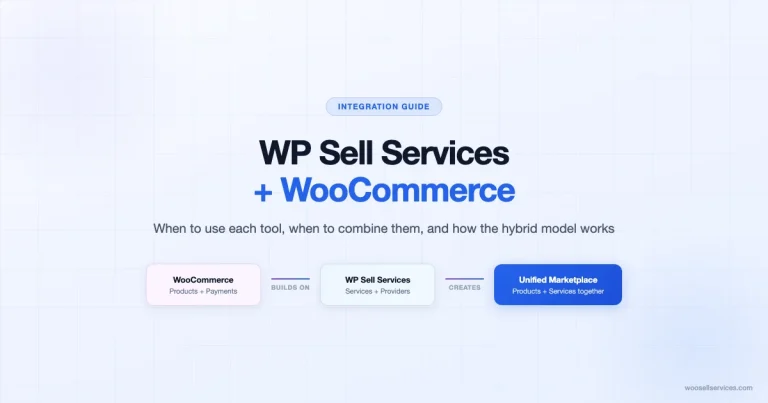
Across every category above, the same handful of gaps show up repeatedly when a service business tries to run through a standard WooCommerce product listing: no natural place to track order status beyond a generic “processing” or “completed,” no structured place for scope or revision conversations to live attached to the order, and no tiered pricing structure that reflects how service scope actually varies. This is exactly the gap WP Sell Services is built to close: multi-tier service packages instead of a single flat price, an order lifecycle that tracks a project from booked through delivered rather than collapsing everything into “paid,” and messaging attached directly to the order so a client’s questions about scope or timeline live in the same place as the transaction record, not scattered across a separate email thread nobody can search later.
Legal, Financial, and Regulated Professional Services
Bookkeeping, tax preparation, contract review, and similar professional services can run through WooCommerce, but they carry their own set of requirements beyond a standard checkout. Client documents often need secure, private exchange rather than a generic downloadable link anyone with the URL could access. Engagement letters and scope agreements typically need to be confirmed before work starts, not just implied by a purchase. If your profession has specific regulatory or licensing requirements around how client engagements are documented, build that into your intake process explicitly rather than assuming a generic eCommerce checkout satisfies it.
Freelance Platforms and Solo Practitioners vs. Agencies
The setup that makes sense differs meaningfully depending on whether you’re a solo practitioner managing your own bookings or an agency coordinating a team across multiple concurrent projects. A single consultant might get by with simple tiered packages and a booking calendar tied to their own availability. An agency handling twenty active client engagements at once needs order status tracking that reflects an actual internal workflow, assigned to a team member, in review, awaiting client feedback, rather than the generic “processing” and “completed” statuses that satisfy a simple retail purchase but tell you nothing useful about where a complex service project actually stands.
Handling Revisions and Scope Changes Without Losing the Thread
Almost every service category above eventually runs into the same operational question: what happens when a client wants changes after the initial delivery? A generic product purchase has no concept of “revision,” it’s a one-time transaction. Service businesses need somewhere for that back-and-forth to live, attached to the specific order it relates to, so a revision request from three weeks ago doesn’t get lost in a general inbox alongside a hundred unrelated emails. Whatever tool handles this for your store, confirm before launch that it actually keeps this history intact and easy to find, rather than trusting a workaround that works fine for the first order and falls apart once you’re juggling a dozen active engagements simultaneously.
Building Trust Before the First Purchase
Services are harder to evaluate before purchase than physical products, a customer can look at a product photo and know roughly what they’re getting, but a design package or a consulting hour is harder to judge sight unseen. Portfolio examples, client testimonials, and case studies do more work on a service listing than they typically do on a physical product page, since they’re substituting for the tangible preview a physical item offers naturally. If your current service listings are just a title, a price, and a paragraph of description, that’s usually the first gap worth closing before worrying about more advanced configuration.
Pricing Transparency and Trust
Vague pricing (“contact us for a quote” on every single listing) tends to suppress conversion compared to clear tiered pricing customers can evaluate without having to reach out first. Where possible, publish real starting prices even for services with genuine variability, and reserve the custom-quote path for the projects that truly can’t be estimated in advance rather than defaulting to it for everything. A prospective client who can see roughly what something costs before contacting you is a warmer lead than one who has to guess whether your services are even in their budget range, and warmer leads convert with less back-and-forth.
Setting Realistic Expectations About Setup Time
Getting a service marketplace properly configured, tiered packages defined, intake questions built, order statuses matched to how your actual delivery process works, takes real setup time upfront, more than a basic physical-product store where you’re mostly just entering price and stock. Budget a few real working sessions for this rather than expecting to knock it out in the same afternoon you’d spend listing ten simple physical products. That upfront investment pays off in reduced manual coordination once the store is running, every client interaction that would otherwise happen over email instead happens inside a system built to track it.
Comparing Structures by Category
| Service type | Best pricing structure | Key extra requirement |
|---|---|---|
| Web development, design | Tiered packages | Clear scope definition and intake process |
| Marketing, SEO, virtual assistance | Recurring subscription | Automatic recurring billing |
| Consulting, coaching, photography | Session or date-based | Calendar booking integration |
| Writing, translation | Word count or project tiers | Clear deliverable definition |
| Education, courses | One-time or subscription | Course delivery/progress tracking |
Frequently Asked Questions
Can I sell both products and services from the same WooCommerce store?
Yes, this is common, an agency selling both physical merchandise and consulting services, for instance, and there’s no conflict running both through the same store as long as each is configured to match its own actual structure rather than forcing services into the physical-product template.
Do I need a booking plugin if my service doesn’t involve scheduled time?
No, booking functionality only matters for services genuinely tied to a specific date or time slot. A one-time deliverable like a logo design or a written article doesn’t need scheduling, it needs clear scope and turnaround expectations instead.
How do I price a service that varies significantly project to project?
Tiered packages with clearly defined scope at each level, rather than a single price, handle most of this variation. For genuinely unique, hard-to-estimate work, a “starting at” price paired with a custom quote request option covers the outlier cases without forcing every project into a rigid tier.
Moving From Manual Coordination to a Structured System
Most service businesses that end up on WooCommerce didn’t start there deliberately, they started with a contact form and email, grew past what email could reasonably track, and only then went looking for something more structured. Recognizing that transition point matters, the signs are usually a growing backlog of half-remembered client conversations, orders (or their email equivalent) with no clear status anyone can check at a glance, and a business owner who’s become the single point of failure for remembering where every project actually stands. If that sounds familiar, it’s less a question of whether to formalize the setup and more a question of doing it before the backlog gets worse rather than after, since the migration only gets harder the more history there is to untangle.
Turning a Service Into a Real WooCommerce Storefront
WooCommerce’s checkout, payment processing, and order management underneath are solid infrastructure for a service business, the same reliability that works for physical retail works underneath a service listing too. Whichever category above fits what you actually do, the difference between a workaround and a properly fitted setup comes down to matching pricing structure, scheduling needs, and order tracking to how the work actually happens, rather than forcing every service into a generic product template built for something else entirely.
The businesses that struggle most are the ones treating a service sale exactly like a product sale and wondering why client communication keeps sprawling across email, spreadsheets, and sticky notes. The businesses that run smoothly picked a structure that matched their actual delivery process from the start, and adjusted it as the work grew more complex rather than bolting fixes onto a foundation that was never built for the job in the first place.
Niche Service Categories Worth Considering
Beyond the broad categories above, plenty of narrower service businesses fit this same model without needing their own dedicated section. Pet-related services, dog training consultations, grooming bookings, run cleanly through a bookings-capable setup the same way a photography shoot does. Home services like interior design consultations or landscape planning benefit from the same tiered-package structure that works for design and marketing services. The underlying pattern holds regardless of niche: identify whether the service is scheduled, project-based, or recurring, and configure the store around that shape rather than assuming every service fits the same generic template.
If your specific niche doesn’t map neatly onto any category above, the diagnostic question to ask is simple: does a client buy a defined deliverable, a block of someone’s calendar time, or an ongoing relationship. That answer points directly to the pricing structure and extra tooling the business actually needs.
Interesting Reads
WooCommerce Single Product Page Examples
How to Restrict the Quantity per Product Attribute in WooCommerce