5 Best WooCommerce Terms and Conditions Popup Plugins


Every WooCommerce store needs to make sure customers agree to terms and conditions before making a purchase. While this is essential for legal reasons, it doesn’t have to disrupt the user experience. Using the best WooCommerce Terms and Conditions popup plugins can streamline this process, ensuring customers are fully informed without feeling overwhelmed. These plugins allow you to easily display your terms and conditions in a convenient, non-intrusive way. In this article, we explore the top five WooCommerce Terms and Conditions popup plugins, walk through how to actually set one up, and cover the legal ground rules that determine whether a popup even satisfies your obligations.

What Are WooCommerce Terms and Conditions Popup Plugins?
WooCommerce Terms and Conditions popup plugins are tools designed to display your store’s terms and conditions in a popup window before customers proceed with a purchase. These plugins are essential for ensuring legal compliance, as they make sure that customers are aware of and agree to your store’s policies before completing their transactions. Typically, these popups appear during the checkout process, and customers are required to click a checkbox or button to confirm their agreement.
Key Features of WooCommerce Terms and Conditions Popup Plugins
Customizable Design: Most plugins allow you to customize the appearance of the popup, including colors, text, size, and position, ensuring the popup blends with your website’s design and brand.
WooCommerce Integration: Seamless integration with WooCommerce ensures that the popup works effectively on your checkout pages, making it easy for customers to interact with it while completing their purchases.
Mobile Responsiveness: These plugins are typically designed to be mobile-friendly, ensuring that customers using mobile devices can view and interact with the popup without issues.
Agreement Requirement: Many plugins require customers to actively agree to the terms and conditions before proceeding with checkout. This can be enforced through checkboxes, buttons, or a mandatory “I Agree” action.
Multilingual Support: Some plugins offer multilingual support, allowing you to present your terms and conditions in different languages, which is crucial for international stores.
Popup Display Settings: Control when and where the popup appears, such as triggering it only on checkout, after a certain action, or automatically when a customer enters the checkout page.
Best WooCommerce Terms and Conditions Popup Plugins
1. YITH WooCommerce Terms and Conditions Popup
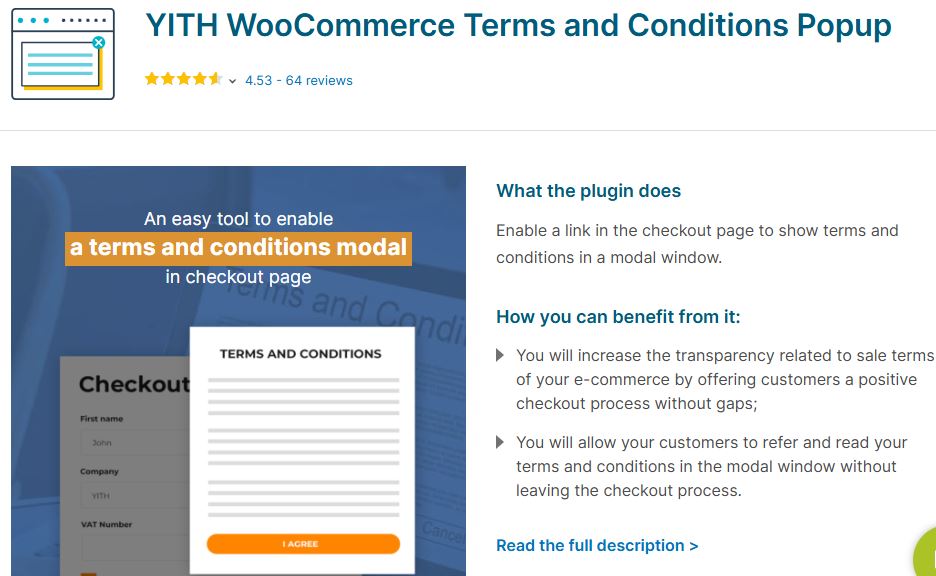
YITH WooCommerce Terms and Conditions Popup is one of the most popular options for displaying terms and conditions in an engaging popup format on WooCommerce websites. This plugin is known for its ease of use, flexibility, and customization options, making it ideal for stores looking to improve user experience and maintain legal compliance. It allows you to set conditions for the popup and control its appearance based on your needs.
Pros:
Highly customizable popup design. Easy integration with WooCommerce. Option to force customers to agree before proceeding with checkout.
Cons:
Premium version required for advanced features. Limited free version functionality. Lacks in-depth analytics and tracking.
Key Features:
Customizable terms and conditions popup. Force agreement before checkout. WooCommerce compatibility and easy integration.
2. WP Auto Terms
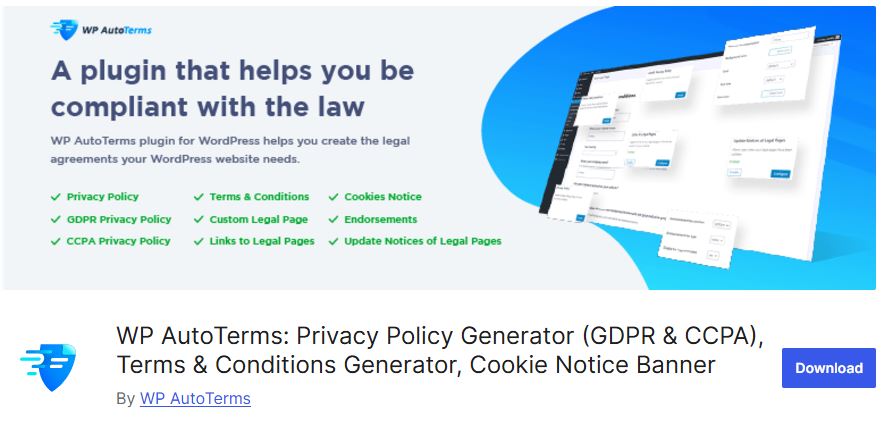
WP Auto Terms is a popular plugin that helps you easily generate and display your website’s terms and conditions, privacy policy, and other legal documents. It comes with a simple popup feature that can be used to display your terms and conditions for WooCommerce checkout pages. This plugin is designed to save you time and effort in creating and updating necessary legal pages, especially when running an eCommerce store.
Pros:
Easy setup and integration with WooCommerce. Automatically generates privacy policies, terms, and conditions. Offers customizable templates.
Cons:
Limited design customization options for the popup. Basic functionality in the free version. Lacks advanced features for larger stores.
Key Features:
Automated terms and conditions creation. Simple popup display for WooCommerce checkout. Customizable templates and legal document generator.
3. Cookie Notice for GDPR & CCPA
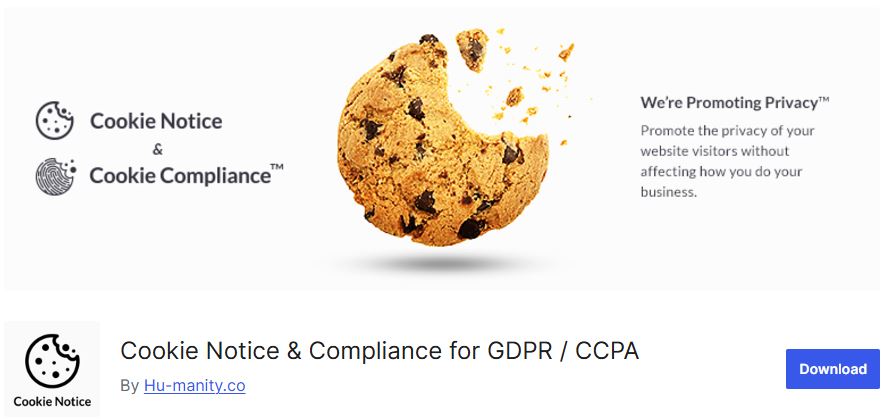
While primarily known for handling cookie consent, Cookie Notice for GDPR & CCPA also allows you to display your terms and conditions in a stylish, user-friendly popup. This plugin is especially useful for stores that need to comply with GDPR and CCPA regulations, and it’s an excellent choice for those who want to ensure customers acknowledge their legal terms during the checkout process.
Pros:
Compliance with GDPR and CCPA regulations. Customizable popup design. Supports multiple languages for international customers.
Cons:
Primarily focused on cookies and privacy policies, with limited terms and conditions options. Requires a premium version for advanced features. May require additional configuration for WooCommerce integration.
Key Features:
Cookie consent management. Terms and conditions popup integration. Multiple language support.
Also Read: Best WooCommerce Donation Plugins to Boost Online Contributions
4. Terms and Conditions Popup for WooCommerce
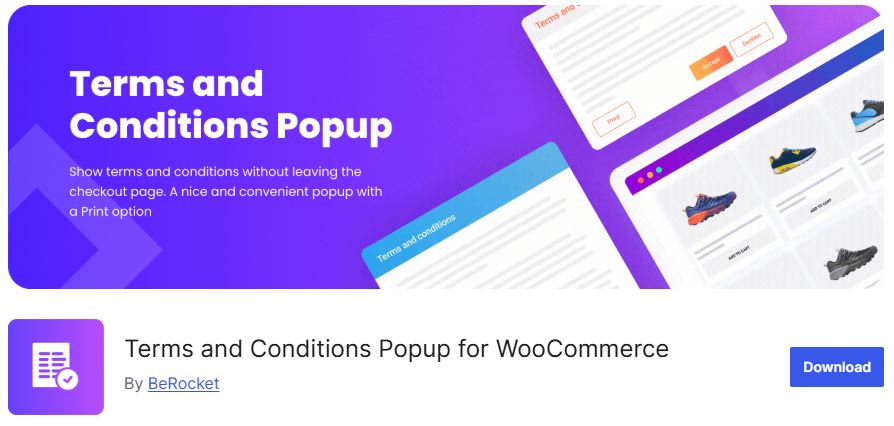
This plugin is a straightforward solution for displaying your terms and conditions on your WooCommerce store. It provides a clean, easy-to-use popup that appears before checkout, ensuring customers agree to your policies. It also allows you to add custom messages or links to specific pages, such as privacy policies and return policies, in a professional way.
Pros:
Simple setup and WooCommerce integration. Customizable popup design. Lightweight and efficient.
Cons:
Lacks advanced features like cookies consent or policy generation. Limited control over styling without CSS knowledge. No built-in analytics or tracking.
Key Features:
Customizable popup display. Seamless WooCommerce integration. Simple terms and conditions popup feature.
5. WP Terms Popup
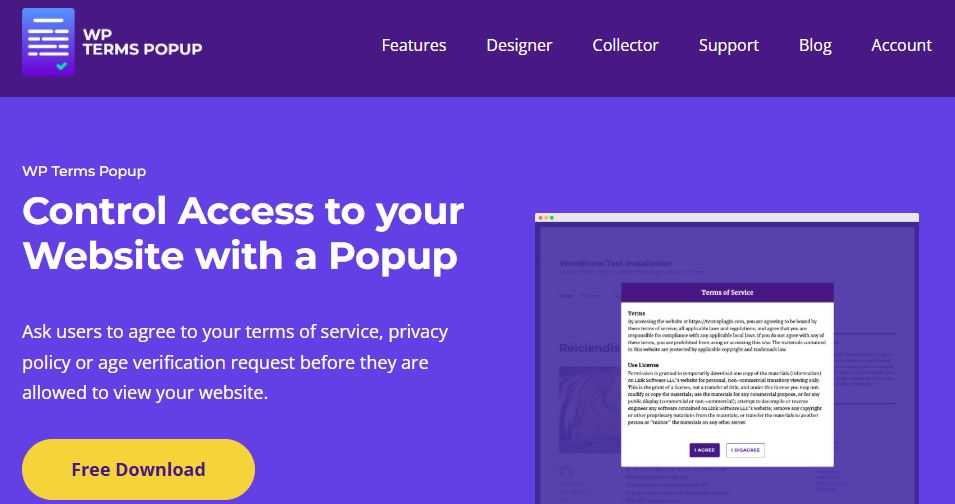
WP Terms Popup is designed specifically for WooCommerce stores to display terms and conditions popups on checkout pages. The plugin is highly customizable and allows for a clean user experience without disrupting the purchasing flow. It ensures customers are legally bound to your terms and conditions while keeping the process smooth and straightforward.
Pros:
Quick and easy integration with WooCommerce. Highly customizable popup appearance. Responsive and mobile-friendly.
Cons:
Lacks a built-in terms and conditions generator. Limited to WooCommerce stores only. Basic tracking and analytics.
Key Features:
Fully customizable popup window. Mobile-responsive design. Option to link terms and conditions to a specific page.
Quick Comparison: 5 WooCommerce Terms and Conditions Popup Plugins
Reading five separate write-ups is slower than scanning a table when you already know roughly what you need. Here’s the same five plugins side by side:
| Plugin | Best for | Force-agreement checkbox | Free version | Multilingual |
|---|---|---|---|---|
| YITH T&C Popup | Stores wanting the most design control | Yes | Limited | Premium only |
| WP Auto Terms | Stores that need the legal pages generated, not just popped up | No | Yes, basic | No |
| Cookie Notice for GDPR & CCPA | Stores that need cookie consent and T&C in one plugin | Yes | Yes | Yes |
| T&C Popup for WooCommerce | Stores wanting a lightweight, no-frills popup | Yes | Yes | No |
| WP Terms Popup | Stores that only sell through WooCommerce and want mobile polish | Yes | Limited | No |
How to Set Up a Terms and Conditions Popup: A Walkthrough
The general setup flow is similar across most of these plugins. Using YITH WooCommerce Terms and Conditions Popup as the example, here’s what the process actually looks like from install to live checkout:
- Install and activate the plugin from Plugins > Add New, or upload the zip if you bought the premium version directly from YITH.
- Create or link your Terms and Conditions page. If you don’t already have one under WooCommerce > Settings > Advanced > Terms and conditions page, create it first. Every popup plugin pulls from this page or a page you specify in its own settings.
- Open the plugin’s settings panel (usually under WooCommerce > Settings or its own top-level menu item) and set the popup trigger. Most stores trigger the popup on the checkout page, either automatically on page load or only when the customer clicks “Place Order” without having checked the agreement box first.
- Customize the popup text and buttons. Replace generic placeholder text like “Please accept our terms” with something that names your actual policy, e.g., “By placing this order, you agree to our Terms of Service and Refund Policy.”
- Style the popup to match your store’s color scheme rather than leaving the plugin’s default blue-and-white theme, which visibly clashes with most storefronts and can make the popup look like a third-party ad rather than part of checkout.
- Test on a real order. Place a test order and confirm the popup blocks checkout until the box is checked, that the checkbox state is recorded (some plugins log this in order notes, which matters if you ever need to prove agreement), and that the popup renders correctly on mobile.
That last step, confirming the agreement is actually recorded somewhere retrievable, is the one store owners skip most often. A popup that simply displays text without logging the customer’s acceptance gives you a weaker compliance position than one that timestamps the agreement against the order.
Legal Requirements by Region: What a Popup Actually Needs to Do
A Terms and Conditions popup is a UI pattern, not a legal guarantee on its own. Whether it satisfies your obligations depends on the jurisdiction your customers are in and how the popup is configured.
United States: Most US states don’t mandate a specific consent mechanism for e-commerce terms, but courts have repeatedly ruled on “clickwrap” versus “browsewrap” agreements. A clickwrap agreement, where the customer must actively check a box or click a button to proceed, is far more enforceable than a browsewrap agreement, where terms are merely linked in a footer. A popup that blocks checkout until the box is checked is a clickwrap pattern and holds up better if a dispute ever reaches small claims or arbitration.
European Union (GDPR): The GDPR angle isn’t really about terms and conditions, it’s about consent for data processing. If your Terms and Conditions popup also references data collection, marketing emails, or third-party analytics, that consent needs to be separable from the “I agree to terms” checkbox. Bundling GDPR consent into a single generic checkbox is a common mistake that regulators have flagged in other contexts.
United Kingdom: Post-Brexit UK GDPR mirrors the EU approach closely enough that the same separation of consent applies. The Consumer Rights Act 2015 additionally requires that key contract terms, including your terms of sale, be made available before the contract is formed, which a pre-checkout popup satisfies as long as it appears before payment is captured, not after.
Australia: The Australian Consumer Law doesn’t require a specific popup mechanism, but the terms need to be reasonably brought to the customer’s attention before the transaction completes. A popup that appears at checkout, rather than a link buried in the footer, meets this bar more comfortably than passive disclosure.
None of this is a substitute for a lawyer reviewing your actual terms and conditions document. The popup plugin handles display and consent capture; it doesn’t write or validate the legal content itself.
Common Mistakes Store Owners Make With Terms and Conditions Popups
- Linking to a blank or placeholder Terms page. Some themes ship with a default “Terms and Conditions” page containing Lorem Ipsum text that never gets replaced. The popup then technically works, but the agreement is meaningless.
- Making the popup dismissible without checking the box. If a customer can close the popup with an X and still complete checkout, you’ve built a browsewrap agreement disguised as a clickwrap one, which weakens your legal position.
- Not testing on mobile checkout. A popup that renders as a tiny, unreadable overlay on a 390px screen doesn’t meaningfully inform anyone. Since a large share of WooCommerce checkout traffic is mobile, this isn’t a minor edge case.
- Forgetting to update the popup after policy changes. When your return policy or shipping terms change, the linked Terms page needs to reflect that immediately, not weeks later. Customers who checked the box under the old terms have an argument that the new terms don’t apply to their order.
- Using the same generic checkbox text as everyone else. “I agree to the Terms and Conditions” with no link visible in the popup itself (only in a separate tab) creates friction. Keep the actual terms readable inside the popup or as a clearly clickable link within it.
Benefits of Using WooCommerce Terms and Conditions Popup
Legal Compliance: One of the primary benefits of using a WooCommerce Terms and Conditions popup is ensuring that your store complies with legal requirements. Many countries and regulations, such as GDPR and CCPA, require businesses to obtain explicit consent from customers regarding their terms before a purchase. A popup ensures customers are aware of your policies and agree to them, minimizing legal risks.
Improved Customer Trust: Displaying clear and accessible terms and conditions through a popup fosters transparency and trust with customers. By providing easy access to your store’s policies, customers can make informed decisions, which enhances their confidence in your business.
Seamless User Experience: A well-designed popup ensures that customers can review your terms without interrupting their shopping experience. With customizable display options, the popup can be designed to blend with your store’s layout, making the process smooth and unobtrusive.
Better Conversion Rates: When customers are required to acknowledge your terms and conditions before completing a purchase, it reduces the chances of disputes or chargebacks later on. This can result in a better post-purchase experience, leading to higher customer satisfaction and fewer abandoned carts, ultimately boosting conversion rates.
Customizable and Flexible: WooCommerce Terms and Conditions popups are highly customizable, allowing you to control the design, content, and behavior of the popup. You can add links to specific policies, adjust the size, color, and position of the popup, and choose the most suitable time for the popup to appear.

Final Thoughts on WooCommerce Terms and Conditions Popup
When running an online store, ensuring that customers agree to your terms and conditions is crucial for both legal and practical reasons. The 5 best WooCommerce Terms and Conditions popup plugins covered above offer a range of features, from simple integration to advanced customization options. By using one of these plugins, correctly configured as a clickwrap agreement rather than a passive disclosure, you can enhance customer experience, ensure compliance, and keep your store running smoothly. Whether you need basic functionality or more in-depth control, there’s a solution for every WooCommerce store.
FAQs
1. What is a WooCommerce Terms and Conditions Popup Plugin?
A WooCommerce Terms and Conditions Popup Plugin displays your store’s terms and conditions in a popup window before customers finalize their purchases. It ensures customers agree to your policies, improving compliance and transparency.
2. Why should I use a WooCommerce Terms and Conditions Popup?
It helps ensure your business complies with legal regulations, like GDPR, by obtaining explicit customer consent to your terms before checkout. It also improves customer trust and reduces disputes.
3. Do WooCommerce Terms and Conditions Popups affect conversion rates?
Yes, when customers are presented with clear terms and conditions they are more likely to proceed with their purchase, leading to fewer abandoned carts and better conversion rates.
4. Can I customize the popup design?
Yes, most plugins allow you to customize the popup’s design, including its size, color, position, and the content it displays, ensuring it aligns with your store’s branding.
5. Are WooCommerce Terms and Conditions Popup plugins mobile-friendly?
Many plugins are mobile-responsive, meaning they are optimized for smaller screens and ensure a seamless experience on smartphones and tablets. Always test the popup on an actual phone before launch, not just in a browser’s device emulator, since real touch targets and viewport quirks don’t always match.
6. Can I add custom text or links to the Terms and Conditions Popup?
Yes, you can typically add custom text and link to your full terms and conditions page, privacy policy, and other legal documents within the popup.
7. How does a Terms and Conditions Popup improve customer trust?
By clearly presenting your store’s policies and requiring customers to agree before completing their purchase, you promote transparency, which builds trust with your audience.
8. Is a WooCommerce Terms and Conditions Popup necessary for every store?
While it’s not strictly mandatory for every store, it is highly recommended, especially for compliance with legal requirements and to ensure a smooth and transparent shopping experience.
9. Does a checkbox popup replace the need for a lawyer-reviewed Terms and Conditions page?
No. The popup is a consent-capture mechanism; the underlying Terms and Conditions document is the actual legal content. A well-configured popup pointing to a weak or generic terms page still leaves you exposed. Have the terms page itself reviewed, then use the popup to make sure customers actually see and agree to it.
10. What happens if a customer disputes a charge and claims they never saw the terms?
This is where logging matters. Plugins that record the checkbox agreement against the order (timestamp, IP, or at minimum an order note confirming the box was checked) give you evidence to counter the dispute. Plugins that only display the popup without logging anything leave you with no record beyond “the popup was installed at the time,” which is a weaker position in a chargeback dispute.
Interesting Reads
10 Best WordPress Popup Plugins