10 Best AI Photo Editors in 2026


Editing photos used to mean hours in Photoshop, layer masks, and a decent amount of patience. AI has changed that math. Sky replacement, noise reduction, background removal, and portrait retouching that used to take real skill now happen in a few clicks, and the results hold up. Whether you’re a working photographer trying to cut hours off a wedding shoot edit or someone who just wants their vacation photos to look less flat, there’s an AI photo editor built for that exact problem. Here’s a rundown of the ten worth knowing about in 2026, what each one is actually good at, and how to figure out which one fits your workflow.

How to Actually Choose Between These
Most of these tools overlap on paper, but they diverge fast once you start using them for real work. A few questions narrow the field quickly:
- What’s your skill level? Beginners generally get further, faster, with something like Fotor or BeFunky. Professionals who want granular control still reach for Adobe Photoshop or Luminar Neo.
- What specific problem are you solving? If it’s noise and sharpness, Topaz Labs Photo AI is built for exactly that. If it’s pulling a subject off a background fast, Remove.bg does one thing and does it well.
- What’s the budget? Some tools have a genuinely usable free tier (Pixlr X, Canva); others expect a subscription or a one-time purchase before you get anywhere useful.
- How much volume are you processing? Batch editing matters a lot once you’re past a handful of images. Photolemur and Topaz Labs Photo AI both handle large batches without much babysitting.
- Do you want automation or control? Photolemur leans fully automatic. Photoshop gives you every dial imaginable. Most tools sit somewhere in between.
The 10 Best AI Photo Editors
1. Adobe Photoshop (AI-Powered Tools)
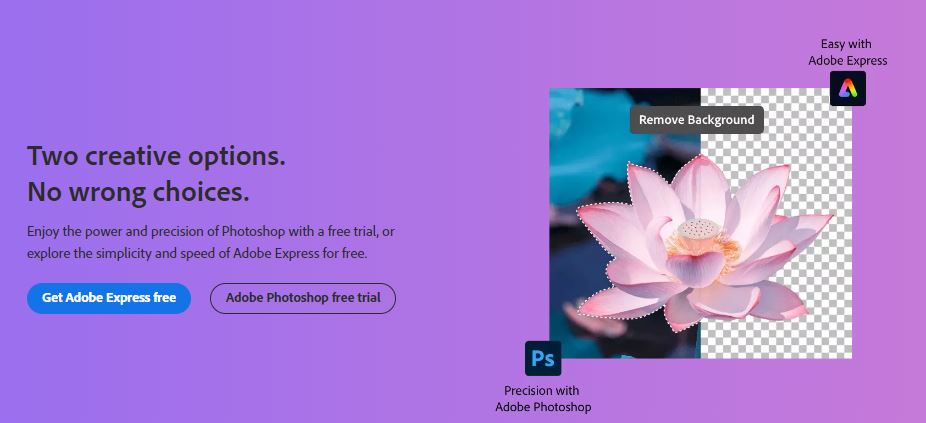
Photoshop is still the reference point everyone else gets compared to, and its Neural Filters have quietly become one of the more genuinely useful AI features in any editor on this list. Sky replacement takes seconds instead of a careful selection-and-mask job, and portrait retouching that used to require real technique is now closer to a slider.
Key Features:
- Neural Filters for instant edits.
- Sky Replacement tool.
- AI-powered auto-selection and content-aware fill.
- Retouching with one-click enhancement.
Pros:
- Powerful and versatile.
- Advanced AI features.
- Perfect for professionals.
Cons:
- Expensive subscription model.
- Requires a learning curve.
2. Luminar Neo
Luminar Neo carved out its own space by making AI editing feel less like a bolt-on feature and more like the whole point. Sky replacement, portrait bokeh, and automatic scene enhancement are all built around getting a good result without a dozen manual steps, which is exactly why it’s picked up a following among people who don’t want to become full-time editors just to fix a photo.
Key Features:
- AI Sky Replacement.
- Portrait Bokeh AI for depth of field.
- Automatic image enhancer.
- Layer-based editing.
Pros:
- User-friendly interface.
- Wide range of AI tools.
- One-time purchase option.
Cons:
- Slower performance with large files.
- Limited customization options compared to Photoshop.
3. Topaz Labs Photo AI
Topaz built its reputation on doing one category of problem better than anyone else: noise, softness, and low resolution. Photo AI takes a grainy, slightly soft image and pulls detail out of it that genuinely wasn’t visible before, which makes it a go-to for photographers salvaging shots from low light or older gear.
Key Features:
- AI-powered sharpening.
- AI noise reduction.
- Image upscaling.
- Batch processing.
Pros:
- Exceptional quality for noise reduction.
- Great for professional photographers.
- Batch processing speeds up workflow.
Cons:
- Limited creative editing features.
- Pricey compared to competitors.
4. Fotor
Fotor is where a lot of casual users land first, and for good reason, it strips away the intimidating parts of photo editing without stripping away the results. One-click enhancement genuinely works for most everyday photos, and the interface doesn’t require any prior editing experience to get comfortable in.
Key Features:
- AI-powered retouching.
- One-click enhancement.
- Background remover.
- Collage maker and design templates.
Pros:
- Free version available.
- Easy-to-use interface.
- Fast processing.
Cons:
- Limited advanced editing options.
- Watermark on free version outputs.
Also Read: 10 Best AI Apps for iPhone in 2024
5. Pixlr X
Pixlr X sits in a comfortable spot between a full desktop editor and a mobile filter app. It’s become a favorite for people editing photos specifically for social media, where a fast AI cutout or a quick retouch matters more than deep manual control.
Key Features:
- AI Cutout (background removal).
- Filters and effects.
- One-click photo retouching.
- Online and mobile platform accessibility.
Pros:
- Free and accessible online.
- Fast AI-driven features.
- Beginner-friendly interface.
Cons:
- Ads in the free version.
- Lacks in-depth professional features.
6. Canva

Canva wasn’t built as a photo editor first, but its AI tools have made it a legitimate option for anyone who needs to enhance an image and drop it straight into a social post or marketing graphic without switching apps. The background remover alone has probably saved more people time than any single feature Canva ships.
Key Features:
- AI background remover.
- Photo filters and effects.
- Auto image enhancer.
- Rich template library for design projects.
Pros:
- Intuitive drag-and-drop interface.
- Excellent for content creators.
- Free version available.
Cons:
- Limited in advanced editing features.
- Some features locked behind a paywall.
7. Corel PaintShop Pro (AI)
PaintShop Pro has quietly stayed relevant as a lower-cost Photoshop alternative, and its AI tools, upsampling, denoising, artifact removal, cover a lot of the same ground without the subscription. It won’t match Photoshop’s ecosystem, but for the price, the AI feature set punches above its weight.
Key Features:
- AI Upsampling and denoise tools.
- AI-powered artifact removal.
- Photo restoration tools.
- Layer-based editing for more control.
Pros:
- One-time payment option.
- Powerful AI features for the price.
- User-friendly for beginners.
Cons:
- Slower performance compared to competitors.
- Limited plugin support.
8. BeFunky
BeFunky leans into being approachable rather than powerful, and that’s intentional. The AI tools here are simple by design, which makes it a solid pick for someone who wants a quick fix on a photo without learning what a layer mask is.
Key Features:
- AI portrait retouching.
- AI photo effects and filters.
- Collage and graphic design tools.
- Batch editing capabilities.
Pros:
- Free version available.
- Easy-to-use interface.
- Great for quick edits.
Cons:
- Limited advanced features.
- Ads in the free version.
9. Remove.bg
Remove.bg does exactly one job, but it does it about as well as it can be done. Upload a photo, get a clean cutout back in seconds, no manual selection required. For e-commerce product shots or anyone who needs a transparent PNG fast, it’s hard to beat.
Key Features:
- AI-powered background remover.
- High-quality PNG outputs.
- API access for developers.
Pros:
- Extremely fast and accurate.
- Simple and efficient for background removal.
- Free tier available.
Cons:
- Limited to background removal only.
- Paid version needed for high-resolution downloads.
10. Photolemur

Photolemur’s whole pitch is that you shouldn’t have to know anything about editing to get a better photo. Drop in an image and it handles color correction, sky enhancement, and face retouching automatically. For someone processing a big batch of casual photos with zero interest in manual adjustment, that hands-off approach is the entire appeal.
Key Features:
- Automatic photo enhancement.
- AI-driven face retouching.
- Batch processing for multiple images.
- Sky enhancement and color correction.
Pros:
- Fully automatic process.
- Great for beginners.
- Saves time with batch editing.
Cons:
- Limited manual controls.
- Less suitable for professional photographers.
Comparison Table of AI Photo Editors
| AI Photo Editor | Key Features | Pros | Cons | Pricing Model |
|---|---|---|---|---|
| Adobe Photoshop | Neural Filters, Sky Replacement, AI Retouching | Advanced features, professional-quality | Expensive, learning curve | Subscription |
| Luminar Neo | AI Sky Replacement, Portrait Bokeh AI | User-friendly, affordable | Slower with large files | One-time purchase & subscription |
| Topaz Labs Photo AI | AI Sharpening, Noise Reduction | Great for noise reduction, batch processing | Limited creative tools | One-time purchase |
| Fotor | One-click enhancement, AI retouching | Free version, fast and easy | Limited advanced tools | Free & subscription |
| Pixlr X | AI Cutout, filters, online accessibility | Free, easy to use | Ads in free version, fewer pro features | Free & subscription |
| Canva | Background remover, auto enhancement | Free version, creative tools | Limited advanced editing | Free & subscription |
| Corel PaintShop Pro | AI Upsampling, Denoise, Photo restoration | One-time payment, powerful AI | Slower performance | One-time purchase |
| BeFunky | AI retouching, collage maker | Free version, easy to use | Limited advanced features | Free & subscription |
| Remove.bg | Background removal | Fast and accurate | Limited functionality | Free & subscription |
| Photolemur | Automatic enhancement, batch processing | Beginner-friendly, time-saving | Lacks manual control | One-time purchase |

What Sets These Tools Apart in Practice
On paper, a lot of these editors look like they overlap heavily, most claim some version of “AI enhancement” and “one-click editing.” The real difference shows up in edge cases. Sharpening a slightly soft phone photo is trivial for almost any of these tools. Recovering usable detail from a grainy, underexposed shot taken at night is where the gap between Topaz Labs and something like BeFunky becomes obvious. Knowing which category your typical photo falls into saves a lot of trial and error picking a tool.
The same logic applies to background removal. Remove.bg and the AI cutout tools in Canva or Pixlr X can all pull a subject off a plain background reasonably well. Complex edges, hair, fur, semi-transparent objects, separate the tools that are genuinely good at this from the ones that just claim to be. If background removal is a core part of your workflow, it’s worth testing a few tricky images across two or three tools before committing to one.
Building an Efficient Editing Workflow
For anyone processing more than a handful of photos regularly, tool choice matters less than workflow discipline. A common approach that works well: use a batch-capable tool like Topaz Labs Photo AI or Photolemur for the first automatic pass on noise, sharpness, and basic color correction, then move standout images into a more manual tool like Photoshop or Luminar Neo for final touch-ups. Running every single image through a full manual edit is rarely worth the time unless every photo needs individual attention.
For product photography specifically, a tighter workflow usually makes sense: shoot with consistent lighting, run everything through Remove.bg or a similar cutout tool for a clean background, then batch-apply consistent color correction across the set so the whole catalog looks like it came from one shoot. Consistency across a product line tends to matter more to customers than any single photo being individually perfect.
Frequently Asked Questions
Can AI photo editors replace a professional photographer? Not really. They can dramatically improve a mediocre shot, but they can’t fix bad composition, poor lighting decisions made at the time of the shoot, or a subject that was never framed well to begin with. Think of them as a force multiplier for decent source material, not a substitute for the eye behind the camera.
Is it worth paying for a premium AI photo editor if I only edit casually? For occasional use, the free tiers of Fotor, Pixlr X, or Canva usually cover what most casual users need. Paid tools start to earn their cost once you’re editing regularly, need higher resolution outputs, or want to remove watermarks and ads from the workflow.
Do these tools work well on mobile devices? Several, including Pixlr X and Fotor, have solid mobile apps or mobile-responsive web versions. Heavier tools like Photoshop and Topaz Labs are still built primarily for desktop use, where the processing power and screen real estate make a real difference.
How much does AI editing actually save in terms of time? For routine fixes, noise reduction, background removal, basic color correction, the time savings compared to manual editing are substantial, often cutting a task from twenty minutes down to under a minute. For creative or highly specific edits, AI tools speed up the mechanical parts but still benefit from a human making the final judgment calls.
Watching Out for Over-Processed Results
AI enhancement tools have a specific failure mode worth knowing about before you rely on them heavily: over-processing. Push noise reduction too far and skin starts looking waxy and plastic. Push sharpening too hard and fine detail turns into visible artifacts around edges. Automatic tools that apply a strong default enhancement, Photolemur in particular, can produce results that look impressive at a glance but fall apart under closer inspection.
The fix is usually just restraint. Most of these tools let you dial back the intensity of an automatic edit rather than accepting the default at full strength. Comparing a heavily processed version side by side with the original, at full resolution rather than a thumbnail, catches over-processing before it ships in a final deliverable. This matters more for professional work, where a client or customer will eventually view the image at full size, than for a quick social media post nobody’s going to zoom into.
Privacy and Where Your Photos Actually Go
Cloud-based AI editors, and that’s most of the tools on this list, process images on remote servers rather than locally on your device. For casual photos this rarely matters, but for anything sensitive, client work under an NDA, unreleased product photography, images with identifiable people who haven’t consented to third-party processing, it’s worth checking each tool’s data retention policy before uploading. Some services delete uploaded images immediately after processing; others retain them for a period to improve their models unless you opt out.
Desktop-based tools like Photoshop’s Neural Filters and Topaz Labs process at least part of their workload locally, which reduces this exposure somewhat compared to a pure web-upload tool like Remove.bg. If privacy is a genuine concern for your use case, that’s a real factor in which category of tool makes sense, not just an afterthought.
Where AI Photo Editing Is Headed Next
The tools on this list already handle the mechanical parts of editing, noise, sharpness, cutouts, remarkably well. The next wave of development is leaning toward generative editing: filling in missing parts of an image convincingly, extending a photo’s canvas beyond its original edges, or altering lighting and composition after the fact rather than just cleaning up what’s already there. Photoshop’s content-aware fill was an early version of this; newer generative tools take it further.
That shift raises a genuine question worth sitting with as these tools get more capable: at what point does an edited photo stop representing what was actually captured. For product photography and marketing, that’s less of a concern. For photojournalism, documentary work, or anything where authenticity matters, it’s a real line worth being deliberate about, and it’s likely to become a bigger conversation in the industry as generative tools keep improving.
Final Thoughts
Choosing the best AI photo editor depends largely on your needs and experience level. Tools like Adobe Photoshop and Luminar Neo are excellent for professionals, offering advanced AI-powered features. On the other hand, casual users may prefer tools like Fotor or Pixlr X for their simplicity and ease of use. For specialized tasks like background removal, Remove.bg provides a streamlined solution, while Photolemur is ideal for those who want a fully automated editing experience. Each tool has its pros and cons, and understanding your specific needs will guide you to the right choice. Test a couple of options on your own actual photos before committing to a subscription, since the difference between a tool that fits your workflow and one that just looks good in a demo usually only shows up once you’re editing the images you actually care about.
Interesting Reads
Top 10 Best WordPress Plugins for 2026


