Why WooCommerce is the Best Choice for Selling Services Online

A copywriter comparing platforms usually starts with the fee sheet and stops there, which misses most of what actually determines whether the platform works long term. Etsy was built for handmade jewelry and vintage furniture. Shopify was built for physical inventory moving through a warehouse. Neither one was designed with a consultant, a freelance designer, or an agency in mind, and it shows the moment you try to force a service listing into either platform’s mold. WooCommerce wasn’t purpose-built for services either, technically, but its open architecture means it can actually become a service platform, while Etsy and Shopify mostly just tolerate services as an awkward edge case.
Comparing the Three Platforms Honestly
WooCommerce: Built for Whatever You Need It to Be
WooCommerce is a free, open-source WordPress plugin, which means the ceiling on what you can build with it is set by your own effort and imagination, not by a platform’s roadmap decisions. It charges no listing fees and no percentage of sales. You pay for hosting and a domain, plus whatever premium plugins or themes you choose, and that’s the entirety of your recurring cost structure. Everything else, from customer data to email lists to search rankings, belongs to you rather than to a marketplace.
With Woo Sell Services layered on top, WooCommerce gains the specific mechanics a service transaction needs, milestones, order tracking, buyer-seller messaging, that the core plugin doesn’t include on its own. Pair that with a service-oriented theme like Reign and the whole setup starts looking like a purpose-built platform instead of a repurposed product store.
Etsy: A Marketplace That Tolerates Services, Barely
Etsy brings a real, built-in audience, which is genuinely valuable for a brand-new seller with zero traffic of their own. That’s close to the entire case for using it. Store setup is simple, but customization is minimal, every Etsy shop looks fundamentally like every other Etsy shop, which makes differentiation almost entirely dependent on your product photos and description copy. Transaction fees run 6.5% per sale on top of listing fees, and you have essentially no control over how your brand gets presented beyond a banner image and a shop bio.
Shopify: Excellent for Products, Awkward for Services
Shopify is a genuinely strong platform if you’re shipping physical goods, secure hosting, solid built-in security, a polished checkout experience. None of that changes the fact that it was designed around inventory and shipping logic that a service transaction simply doesn’t need. Monthly plans start around $29 and climb from there. Transaction fees apply unless you use Shopify Payments specifically, and customization sits well behind WooCommerce’s open plugin ecosystem. Selling services on Shopify usually means bolting on third-party apps to fake the functionality WooCommerce gets natively through purpose-built plugins.
Why WooCommerce Wins for Service Businesses Specifically
You Control the Whole Experience
On Etsy, the platform dictates layout, and competing listings sit one scroll away from yours at all times. On Shopify, the customization ceiling caps out well below what WordPress offers. WooCommerce hands you full control over how services are presented and priced. Marketing decisions stay yours too, along with complete ownership of every customer interaction and every dollar of the sale. Nothing about your theme, your checkout flow, or your plugin stack is restricted by a platform’s rulebook.
No Marketplace Noise Competing for the Same Click
Etsy shoppers browse dozens of listings in a single session, comparing prices side by side in a way that trains buyers to shop primarily on price rather than trust. A standalone WooCommerce site removes that comparison entirely, a visitor who lands on your service page is evaluating you specifically, not you against nine open tabs of competitors. That distraction-free environment lets you build a real brand presence and guide the customer journey deliberately instead of competing purely on who’s cheapest.
The Math Favors Ownership Over Time
Etsy and Shopify both stack fees, listing fees, transaction fees, monthly subscriptions, that quietly erode margin on every single sale. WooCommerce is open source and free at its core; your only fixed costs are hosting and a domain, plus any premium plugins or themes you choose to add. You keep 100% of what you charge, no commission skimmed off the top, which makes WooCommerce the more cost-effective path for a business planning to scale rather than stay small.
Customization Without a Ceiling
Etsy’s standardized store format and Shopify’s design limitations both cap how far your branding can go. WooCommerce doesn’t have that ceiling. A theme like Reign gives you a service-appropriate layout and intuitive navigation, plus a genuinely professional user experience out of the box. Everything beneath that surface, checkout flow, product pages, customer accounts, is customizable to whatever degree your business actually needs.
Sell Whatever Kind of Service You Actually Offer
Etsy restricts what counts as an acceptable listing in ways that make pure services an awkward fit at best. WooCommerce places no such restriction on you. Consulting, coaching, freelance work, digital products, subscriptions, appointment-based bookings, all of it runs through the same platform, and you can bundle services into packages or layer in recurring billing without needing to migrate to a different tool entirely.
SEO That Isn’t Capped by the Platform
Because WooCommerce runs on WordPress, you get the full range of SEO control, meta descriptions, structured content, technical performance tuning, that Shopify and Etsy both restrict to varying degrees. Plugins like Yoast SEO give you granular control over how every page presents to search engines. That control compounds over time in a way marketplace listings, competing against thousands of others for the same search terms, structurally can’t match.
Woo Sell Services Closes the Remaining Gap
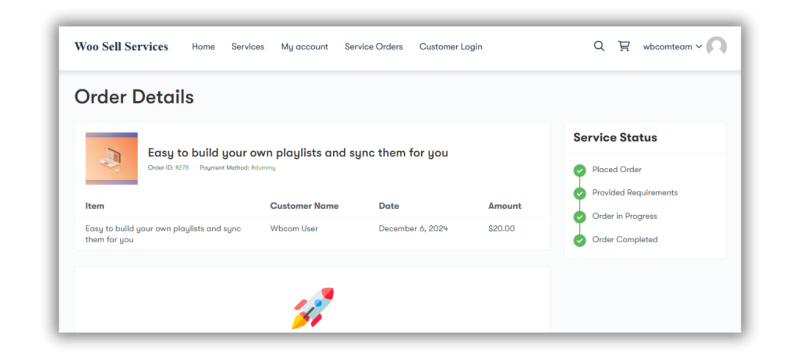
WooCommerce’s biggest limitation for service businesses used to be structural, no milestones, no order tracking built for services, no dedicated buyer-seller communication. Woo Sell Services closes that gap directly, adding a service-specific marketplace layout, order management tailored to service delivery, built-in messaging, real-time status tracking, and a review system scoped to service transactions rather than product reviews. With that plugin installed, WooCommerce stops being a product platform you’re forcing services into and becomes an actual service platform.
What This Looks Like Side by Side
A consultant selling a $500 strategy session on Etsy pays roughly $32.50 in transaction fees plus listing fees, gets a generic shop page indistinguishable from thousands of others, and has zero access to the buyer’s email address for future marketing. The same session sold through WooCommerce with Woo Sell Services costs the consultant nothing beyond payment processing fees, typically 2.9% plus a small fixed fee, well under Etsy’s cut, delivers a fully branded page, and hands the consultant the buyer’s contact information directly for follow-up, referral requests, and future offers.
Multiply that gap across a full year of bookings and the platform choice stops being a stylistic preference. It’s a direct line to how much of your own revenue you actually keep.
What Etsy and Shopify Actually Cost a Service Seller Over a Year
Run the numbers on a mid-volume service seller doing $4,000 a month in bookings. On Etsy, at 6.5% transaction fees plus listing fees, that’s roughly $3,100 to $3,400 a year handed straight to the platform, before accounting for any Etsy Ads spend needed to stay visible against competing listings. On Shopify, a mid-tier plan plus payment processing runs somewhere around $600 to $1,000 a year in platform costs alone, on top of whatever apps get added to patch the service-selling gaps Shopify wasn’t built for.
On WooCommerce, that same seller pays for hosting (commonly $10 to $30 a month) and a domain (roughly $15 a year). Payment processing fees still apply on top, running close to industry-standard card rates regardless of platform. Total annual platform cost lands well under $500 in most cases, meaning the WooCommerce seller keeps thousands more of their own revenue every year at the same volume. That gap only widens as revenue grows, since Etsy and Shopify’s costs scale with sales while WooCommerce’s core costs mostly don’t. A seller who doubles their revenue on WooCommerce doesn’t double their platform costs the way a marketplace seller does.
The Data Ownership Difference Nobody Mentions Upfront
Marketplace sellers rarely think about data ownership until they need it, usually right when they want to launch a new offer and realize they have no way to email their past customers directly. Etsy and Shopify (to a lesser degree) keep that relationship mediated through their own systems, which means your ability to market to past buyers depends on the platform’s own promotional tools and policies, not your own email list.
A WooCommerce store captures customer emails as part of the normal checkout process, which you can then connect to any email marketing tool you choose. That list becomes a genuine business asset, something you can email directly about a new service, a seasonal promotion, or a referral program, without needing permission from a platform that could change its rules at any time.
Brand Trust Compounds Differently on Your Own Domain
A buyer who has a good experience on an Etsy shop associates that experience partly with Etsy, since the platform’s branding surrounds every interaction. A buyer who has a good experience on your own domain associates it entirely with you. That distinction matters enormously for repeat business and referrals, a client who wants to recommend your service can send a direct link to your actual site, with your actual name and branding, rather than a generic marketplace URL buried among thousands of other listings.
Over time, that compounds into search rankings too. Google indexes and ranks your specific domain based on the content and authority you build there. A marketplace listing shares its domain authority with every other seller on the platform, which caps how much SEO value any individual seller can realistically capture.
What a Realistic Migration Looks Like
A designer running an established Etsy shop selling logo design services decides to move to WooCommerce after two years of watching fees eat into margin. Rather than shutting Etsy down overnight, she runs both in parallel for two months: the WooCommerce site goes live with the same service listings, priced identically, while she directs her existing Etsy customer conversations toward the new site for repeat business specifically.
By month three, new customer acquisition has shifted almost entirely to the WooCommerce site through search and referrals, while Etsy continues generating a trickle of new discovery traffic she hasn’t fully replaced yet. Her average order value is also higher on the WooCommerce side, since branded packages and upsells are easier to present clearly outside Etsy’s rigid listing format. She keeps the Etsy shop open at a reduced listing count rather than closing it outright, treating it as a discovery channel that feeds the WooCommerce site rather than a primary sales channel competing against it.
When a Marketplace Still Makes Sense
It’s worth being fair here rather than dismissive: none of this means Etsy or Shopify are bad platforms in every context, Etsy remains a reasonable place to test whether a physical handmade product has demand before investing in a standalone store, and Shopify genuinely excels at inventory-heavy product businesses. The comparison here is specifically about selling services, where WooCommerce’s flexibility and Woo Sell Services’ purpose-built features address needs neither marketplace was designed to handle.
The Support Question Nobody Asks Upfront
New WooCommerce store owners sometimes worry that stepping away from a hosted marketplace means giving up support entirely. It doesn’t, it just changes shape. Etsy and Shopify offer platform support for account and technical issues, but they offer no support at all for growing your actual business, since that’s not their job. A WooCommerce site owner instead relies on a large community and extensive documentation, plus paid support options through hosting providers or plugin developers. For most service sellers that ends up being more responsive and more specific to their actual setup than a generic marketplace help desk.
Frequently Asked Questions
Is WooCommerce harder to set up than Etsy or Shopify?
The initial setup takes more deliberate configuration since you’re assembling WordPress, WooCommerce, a theme, and Woo Sell Services rather than signing up for a single hosted account. That upfront effort buys ownership and cost savings that compound for as long as the business runs.
Do I need coding knowledge to run a WooCommerce service store?
No. The setup described here is plugin configuration and theme selection, not custom development. A developer becomes useful only for design work beyond what the theme and plugins offer natively.
Can I migrate from Etsy or Shopify to WooCommerce later?
Yes, though it’s easier to plan the migration deliberately, export your existing listings and customer data where the platform allows, and rebuild your service catalog on WooCommerce with the Woo Sell Services structure from the start rather than trying to force an existing structure to fit.
Is WooCommerce actually cheaper once hosting and plugins are factored in?
For most service sellers doing meaningful volume, yes. Hosting and premium plugins are fixed, predictable costs, while marketplace commissions scale directly with revenue, the more you sell, the more a percentage-based fee structure costs you compared to a flat WooCommerce setup.
Does WooCommerce handle traffic and security as well as a hosted platform?
With decent hosting and standard security plugins kept updated, yes. The tradeoff is that you’re responsible for choosing and maintaining that hosting and those plugins, rather than having it handled invisibly by a platform. That responsibility is also what gives you control a hosted platform never will.
Should a brand-new service seller with zero audience start on WooCommerce or a marketplace?
A marketplace can make sense as a short-term testing ground specifically because of the built-in discovery traffic. Go in with a plan to migrate once you have proof of demand, rather than treating the marketplace as a permanent home once the business is real.
What happens to my Etsy or Shopify reviews if I switch to WooCommerce?
They stay on the original platform and don’t transfer directly. Screenshot or otherwise document strong reviews before migrating, and use them as testimonial content on the new site, since you’ll be starting the on-site review count from zero.
Choosing the Platform That Fits a Service Business
Etsy and Shopify both do what they were built for very well. Selling services just isn’t what either of them was built for. Selling services online works best on a platform actually built to handle the specifics of a service transaction, not one repurposed from selling physical goods. WooCommerce, paired with Woo Sell Services and a theme like Reign, gives service-based businesses complete control and lower long-term costs. The customization ceiling disappears too, in a way Etsy and Shopify simply weren’t designed to offer.
For more details, see:
What Changes Once You Add a Second Service Line
A single-service seller can get away with a fairly simple WooCommerce setup, one product listing, one checkout path, minimal configuration. Adding a second, genuinely different service, moving from just strategy calls to also offering ongoing retainers, for instance, is exactly where the platform choice starts to matter more than it did at launch. Etsy and Shopify both make this awkward, since neither was built around a business offering fundamentally different transaction types under one roof.
WooCommerce handles this naturally because each service is just another product with its own configuration, pricing model, and checkout flow, no workaround required. A seller who anticipates growing into multiple service lines is better served choosing the more flexible platform from the start, rather than migrating later once the awkward fit becomes a genuine operational problem.
Interesting Reads:
How to Sell Digital Services Online with Woo Sell Services
Fiverr vs. Your Own Website: Why Building Your Service Marketplace is Better