Benefits of Customer Journey Mapping

When I first started mapping customer journeys, I honestly saw it as just “one more marketing framework”, a nice visual for presentations, something to tick off the list. But once I used it consistently across campaigns and client projects, everything changed. Suddenly, I could see what customers felt, not just what they clicked. And that changed how I wrote copy, designed funnels, and even trained my team. A well-crafted customer journey map doesn’t just make your business more organized, it makes it more human. It’s about seeing your brand through your customer’s eyes and designing experiences that make every step feel natural, helpful, and memorable. Here’s what I’ve learned about the real, long-term benefits of customer journey mapping, the ones that truly move the needle.
1. It Builds Deep Customer Empathy
For me, this is the heart of it all. A customer journey map forces you to slow down and listen. It’s no longer about guessing what your audience wants, it’s about understanding what they actually experience.
When I started interviewing customers while building my first journey map, I discovered pain points I’d completely overlooked, things like confusing checkout buttons, slow onboarding emails, and too many pop-ups that made users feel pressured.
These insights didn’t come from analytics; they came from empathy. Once you feel your customer’s frustration, you design differently. You stop asking, “How do I sell this?” and start asking, “How can I make this easier, clearer, or more delightful?”
That’s the foundation of customer-centric marketing, and journey maps make it real.
You can connect this with Steps to Creating a Customer Journey Map, where I discussed capturing emotions at every stage.
2. It Breaks Down Silos Across Teams
Before I started mapping, my marketing, sales, and support teams worked in their own little worlds. Everyone had their KPIs, tools, and perspectives, but no shared story. The customer journey map became that shared story.
When I presented it in team meetings, I noticed something shift, instead of defending their territories, everyone began discussing how to improve transitions between stages. Marketing started aligning campaigns with what sales was hearing from leads. Support started sharing recurring user issues with product designers.
And suddenly, the customer experience became everyone’s responsibility. This alignment doesn’t just make teams more efficient, it creates a unified brand voice.
If you’ve read Customer Journey Map vs. Buyer Journey Map, you’ll see how this kind of alignment connects pre-purchase and post-purchase touchpoints seamlessly.
3. It Highlights Hidden Friction Points
Every business has blind spots, small frustrations that silently drive customers away. Sometimes it’s a form that’s too long. Sometimes it’s a vague pricing page. Sometimes it’s an email that never arrives at the right time.
When you create a journey map, these friction points become obvious. I remember mapping one client’s subscription flow and realizing their “Start Free Trial” button was buried below three paragraphs of text. We moved it up, and their sign-up rate jumped noticeably within the following week.
That’s the power of visibility. Journey maps act like an X-ray for your customer experience, showing you exactly where attention drops or frustration spikes.
To understand where and why these gaps appear, revisit Components of a Customer Journey Map.
4. It Increases Conversion and Retention Rates
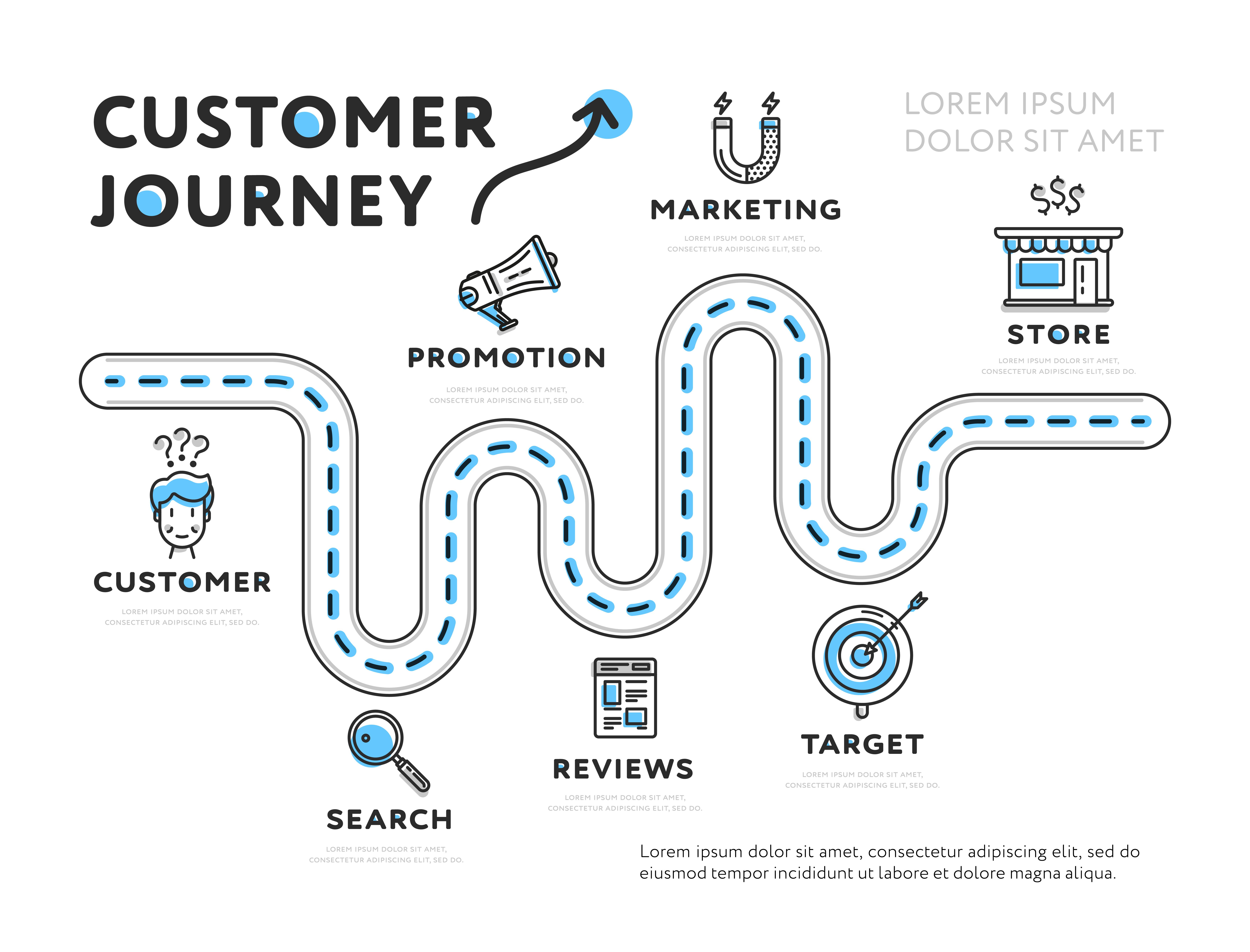
Here’s something I learned through trial and error, you can’t fix conversions by only tweaking ads or landing pages. Conversions improve when every step of the journey feels effortless.
When you optimize each stage, from discovery to checkout to follow-up, you naturally reduce drop-offs and increase trust. One of my favorite success stories was when a client revamped their onboarding emails after mapping the customer journey. Instead of generic “Welcome!” emails, we created personalized sequences based on user behavior. Their activation rate improved meaningfully, and customer satisfaction scores followed.
Retention grew because customers felt seen, not sold to.
5. It Helps You Create Data-Driven Decisions
Customer journey mapping combines qualitative insights (emotions, feedback, interviews) with quantitative data (clicks, conversions, traffic). This mix gives you a complete view, one that’s both emotional and measurable.
For example, if analytics show users dropping off at the checkout page and interviews reveal they “don’t feel secure about payment,” you don’t just have data, you have a direction.
That’s how I approach strategy now. Instead of making assumptions, I make decisions backed by both logic and empathy. It’s a powerful balance, and it’s what turns average marketers into strategic storytellers.
6. It Enhances Personalization
If there’s one marketing truth I’ve learned, it’s this: people don’t want to feel like a number. They want to feel understood. Customer journey maps make personalization easier because you already know what customers want, when they want it, and how they behave.
- Tailor content by stage.
- Trigger specific messages based on emotions or behaviors.
- Offer meaningful solutions instead of generic campaigns.
For example, during the Consideration stage, I often send comparison guides or testimonials. During Retention, I focus on check-ins and value updates. These personalized touches build emotional loyalty, the kind that ads can’t buy.
7. It Builds Long-Term Loyalty
Mapping helps you understand that the real journey begins after purchase. It’s not just about what people buy, it’s about how they feel after buying. When customers feel supported, guided, and valued beyond the transaction, they naturally stay longer and advocate for your brand.
I’ve seen it firsthand. One of my clients implemented a post-purchase nurturing flow after mapping their journey, simple “how’s it going?” emails, personalized product tips, and gratitude notes. Their repeat purchase rate grew steadily over the following months.
That’s the compounding effect of emotional connection.
You can explore more about post-purchase engagement in Customer Journey Map vs. Buyer Journey Map.
8. It Future-Proofs Your Brand
Customer behavior changes constantly, new platforms emerge, preferences shift, and technology evolves. A journey map helps you stay adaptable because it gives you a real-time framework to track and adjust.
Whenever I see a new pattern (like users discovering us through TikTok or AI chat tools), I update my journey map to reflect it. This keeps strategies current, flexible, and ready for what’s next. In a world that moves fast, adaptability isn’t just an advantage, it’s survival.
9. It Sharpens Your Understanding of Emotional Highs and Lows
One thing I didn’t expect when I started this work was how much a journey map reveals about emotional peaks, not just friction. It’s easy to obsess over what’s going wrong and forget to notice what’s already going right.
When I mapped a client’s onboarding flow properly, I found a moment, right after a user completed their first successful action in the product, where satisfaction spiked noticeably in every interview I ran. Nobody on the team had ever thought to reinforce that moment. We added a small celebratory message and a next-step suggestion right there, and it became one of the highest-performing touchpoints in the whole funnel.
Journey maps aren’t just about patching leaks. They’re about finding the moments that already work and doubling down on them.
10. It Makes Cross-Channel Consistency Possible
Customers today don’t experience your brand through one channel. They see an ad on Instagram, read a review on Google, get an email, and maybe call support, all within the same week. Without a journey map, it’s almost impossible to keep that experience coherent.
Mapping forces you to look at the full picture instead of optimizing each channel in isolation. I’ve caught cases where our email tone was warm and casual, but our support scripts were stiff and formal, and customers noticed the whiplash even if they couldn’t articulate why. Once we aligned the voice and pacing across channels using the journey map as the reference point, complaints about “inconsistent experience” dropped, and customers started describing the brand in more consistent language in their reviews too.
Mistakes I Made Early On
I’ll be honest about a few things I got wrong when I started doing this seriously, because I think they’re more useful than another list of benefits.
The first mistake was building the map entirely from internal assumptions. My team and I sat in a room, guessed at what customers were thinking at each stage, and called it done. It looked professional. It was also mostly wrong. The moment I started running real interviews, half of my assumed pain points turned out to be non-issues, and the actual problems were things nobody on the team had even considered.
The second mistake was treating the map as a one-time deliverable. I built a beautiful version, presented it once, and then let it sit in a shared drive for a year. By the time I looked at it again, half of it no longer matched how customers actually behaved, new competitors had entered the space, a new channel had become dominant, and our own product had changed. A journey map that isn’t revisited quietly turns into fiction.
The third mistake was mapping too broadly at first. I tried to capture every possible customer type and every possible path in a single map, and it became so cluttered that nobody on the team could actually use it. Breaking it into two or three simpler maps for our main customer segments made it dramatically more useful, even though it meant more upfront work.
Looking back, all three mistakes came from the same root cause: rushing to a finished-looking artifact instead of sitting with the discomfort of not knowing yet. A messy, honest map beats a polished, guessed-at one every time.
A Hypothetical Walkthrough of What This Looks Like in Practice
The example below is a hypothetical, illustrative scenario meant to show how journey mapping insights translate into action, not an account of a specific real client.
Picture a mid-sized online furniture retailer. Their journey map reveals that customers spend a long time in the “Consideration” stage, often bouncing between the product page and a competitor’s site in the same browsing session, based on session recordings gathered during the mapping process. Interviews turn up the reason: shipping costs aren’t shown until the final checkout step, and customers feel blindsided.
Armed with that insight, the team adds estimated shipping costs directly to the product page. They also notice, through the same mapping exercise, that customers who read at least one review before adding an item to their cart convert at a distinctly higher rate than those who don’t. So they move the review section higher on the page instead of burying it below the fold.
Neither fix required guesswork. Both came directly from watching where real friction and real confidence showed up in the mapped journey. That’s the entire value of the exercise, it turns vague marketing instincts into a specific, prioritized to-do list.
Tools That Make Mapping Easier
You don’t need expensive software to build a useful journey map, especially the first one. A whiteboard, sticky notes, and a handful of customer interviews will get you further than most people expect. That said, once a map needs to be shared across a growing team, a few tool categories tend to help:
- Session recording and heatmap tools, to see where users actually hesitate or drop off.
- A shared visual mapping tool, so the journey map lives somewhere everyone on the team can see and comment on it, not buried in a single person’s slide deck.
- A simple survey or interview scheduling tool, since the qualitative side of mapping depends entirely on actually talking to customers.
The tool matters far less than the discipline of revisiting the map regularly and treating it as a living document instead of a one-off project.
How Often I Revisit a Map Once It Exists
Early on I treated journey mapping as a project with a start and an end date, the kind of thing you finish and check off a list. That framing was wrong, and it took a while to unlearn it. Now I treat a journey map more like a garden than a monument. It needs regular, small attention rather than one big overhaul every few years.
In practice, that means a light quarterly check-in, pulling recent support tickets, a handful of new interviews, and any noticeable shifts in analytics, and asking whether the map still matches reality. Most quarters, the changes are small, a new objection showing up in sales calls, a channel that’s grown in importance. Occasionally something bigger shifts, a new competitor changes what customers expect, or a product redesign changes the whole shape of the early journey, and that’s when a fuller remap is worth the time.
The teams that get the most long-term value from journey mapping aren’t the ones with the most polished diagram. They’re the ones who’ve built the habit of checking it regularly and updating it before it drifts too far from what customers are actually experiencing.
A Quick Word on Getting Started
If you’re mapping a customer journey for the first time, resist the urge to make it perfect. Start with a rough sketch based on what you already know, then validate it with a handful of real customer interviews. Five or six honest conversations will teach you more than weeks of guessing at a whiteboard. You can always add detail later. What matters most in the beginning is capturing the emotional arc accurately, not making the diagram look polished.
Questions People Usually Ask Me About This
How long does it take to build a useful first journey map?
A rough but genuinely useful first version can come together in one to two weeks if you already have a handful of customers willing to talk to you. The mapping session itself might take an afternoon. The interviews are what take real time, and rushing them is the single biggest way to end up with a map full of assumptions instead of evidence.
Do I need a large team to do this properly?
No. Some of the most useful journey maps I’ve built came from a team of two or three people running five customer conversations and one working session. What matters is honesty about what you don’t know yet, not headcount.
How is a customer journey map different from a sales funnel?
A sales funnel tracks a prospect moving toward a purchase decision, largely from the business’s operational point of view. A journey map covers the full experience, before, during, and after the purchase, from the customer’s emotional point of view. They overlap in the middle but answer different questions, one is about conversion mechanics, the other is about experience quality.
What’s the biggest sign a journey map needs to be redone?
When your team stops referencing it in meetings. If nobody pulls up the map when discussing a new campaign, a product change, or a support issue, that’s usually a sign it’s gone stale or was never built with enough real input to feel trustworthy in the first place.
My Takeaway
Over time, customer journey mapping has become one of my favorite strategic tools, not because it looks pretty on slides, but because it changes how teams think, talk, and design.
For me, the biggest benefit isn’t higher revenue (though that comes naturally). It’s the shift in mindset, from business-centered to human-centered. Once you understand your customer’s path, you stop chasing sales and start building relationships. And in the long run, relationships always outperform transactions.
Up next, let’s talk about the Components of a Customer Journey Map, the building blocks that turn all these ideas into something visual, tangible, and actionable.
Interesting Read
B2B Demand Generation: A Comprehensive Beginner’s Guide
Sales Funnels vs. Marketing Funnels: What’s the Difference?
Real-World Examples of Customer Journey Maps
Steps to Creating a Customer Journey Map
Customer Journey Mapping: Understanding Every Step of Your Customer’s Experience