

Whether you’re an experienced blogger, a business owner, or just starting a new website, search engine optimization (SEO) is essential for attracting organic traffic and improving online visibility. WordPress offers a wide range of SEO plugins that simplify optimization, helping you improve content, metadata, site structure, and performance without deep technical knowledge.
Choosing the right plugin can have a significant impact on your search rankings, user experience, and overall site performance. In this guide, we’ll take a closer look at the 10 best SEO plugins for WordPress in 2026, highlighting their key features, advantages, and limitations, so you can make an informed decision and boost your website’s SEO effectively.

Why You Need an SEO Plugin for WordPress
SEO plugins are indispensable tools for WordPress site owners, helping boost visibility, drive organic traffic, and improve rankings in search engine results. While WordPress is celebrated for its flexibility and ease of use, even the most beautifully designed site can struggle to reach its audience without proper SEO. A reliable SEO plugin simplifies optimization, saves time, and ensures your website adheres to the latest best practices. Here’s why having one is vital and how it can benefit your site in 2026.
1. Optimize On-Page Content for Search Engines
SEO plugins guide you in crafting content that search engines can easily understand. They provide step-by-step recommendations for keyword placement, meta descriptions, title tags, headings, and content length. By following these suggestions, your pages and posts are more likely to rank higher in search results while maintaining a natural, user-friendly tone.
2. Generate XML Sitemaps for Better Indexing
An XML sitemap acts as a roadmap for search engines, highlighting all your important pages for easier crawling and indexing. Most modern SEO plugins automatically create and update these sitemaps, eliminating the need for technical know-how and ensuring that every key page of your site is discoverable by search engines.
3. Enhance Readability and User Experience
Readability is a core factor for both users and search engines. SEO plugins often include tools that assess sentence structure, paragraph length, passive voice usage, and content flow. By improving readability, you make your content more engaging, encourage visitors to stay longer, reduce bounce rates, and indirectly boost your search rankings.
4. Simplify Meta Tag and Schema Markup Implementation
Meta tags provide search engines and users with a summary of your content, while schema markup adds structured data to enhance your listings with rich results like star ratings, product details, and event info. SEO plugins make it easy to add and manage meta tags and structured data without coding, giving you greater control over how your pages appear in search results.
5. Improve Internal Linking for Better Navigation and SEO
Internal links connect related pages and posts, improving site navigation and spreading link equity across your site. Plugins like Rank Math and AIOSEO suggest relevant internal links as you create content, helping both users and search engines discover more of your pages, which can increase engagement and improve rankings.
6. Track Your SEO Performance with Analytics Integration
Modern SEO plugins often integrate with Google Analytics, Search Console, or their own dashboards to track traffic, keyword performance, and user behavior. These insights let you evaluate what’s working, identify opportunities for improvement, and fine-tune your SEO strategy to stay ahead of trends and maximize organic growth.
Best SEO Plugins for WordPress
1. Yoast SEO

Yoast SEO continues to be one of the most popular and reliable SEO plugins for WordPress in 2026, trusted by millions of websites worldwide. Its user-friendly interface and step-by-step guidance make it ideal for both beginners and experienced site owners. Beyond basic SEO, Yoast now includes AI powered content suggestions, enhanced schema support, and deeper integration with modern search engine standards, ensuring your content is optimized for both users and search engines.
Key Features
- On-page SEO analysis with actionable recommendations
- Readability analysis to improve content structure and flow
- XML sitemap generation and automatic updates
- Meta title and meta description management
- Breadcrumbs setup for better site navigation
- Social media integration for Facebook, Twitter, and LinkedIn
- Schema and structured data support for rich snippets
Pros
- Excellent for beginners with step-by-step SEO guidance
- Covers almost every aspect of on-page SEO from a single dashboard
- Regularly updated to comply with latest search engine algorithms
- Works seamlessly with Gutenberg and popular page builders
Cons
- Free version has limited advanced features
- Some advanced tools like multiple focus keywords or internal linking automation may be overwhelming for new users
Also Read: 5 Best WooCommerce Plugins Stripe Connect for 2026
2. All in One SEO (AIOSEO)
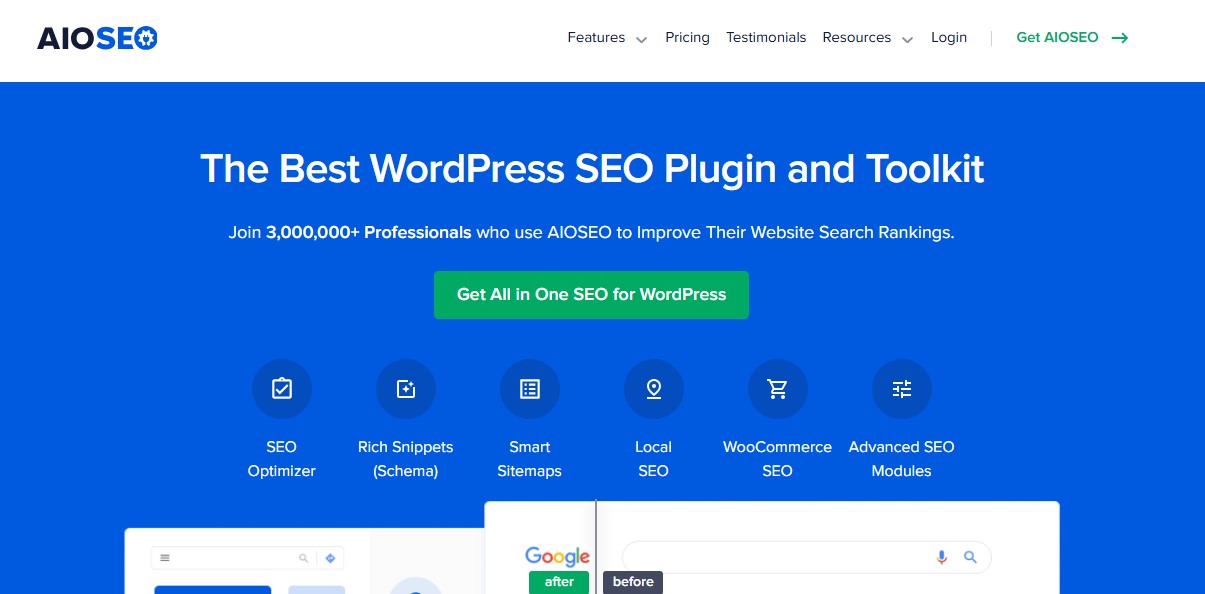
All in One SEO (AIOSEO) is a powerful all-in-one SEO plugin that has been a WordPress favorite for over a decade. In 2026, it has grown into a modern, feature-rich solution for optimizing WordPress sites, offering advanced SEO tools, eCommerce integration, and local SEO support. Its modular design allows users to enable only the features they need, keeping the website lightweight and fast.
Key Features
- On-page SEO analysis and optimization recommendations
- Schema markup and structured data support for rich search results
- WooCommerce SEO optimization for online stores
- Local SEO tools to improve visibility for local searches
- Link assistant for internal linking suggestions
- XML sitemap generation and automatic updates
- Social media metadata management for sharing optimization
Pros
- Beginner-friendly with guided setup wizards
- Excellent support for WooCommerce and local businesses
- Comprehensive feature set for both small blogs and large websites
- Modular design allows enabling only the tools you need
Cons
- Premium features can become costly for full functionality
- Some advanced options may require a learning curve for beginners
3. Rank Math
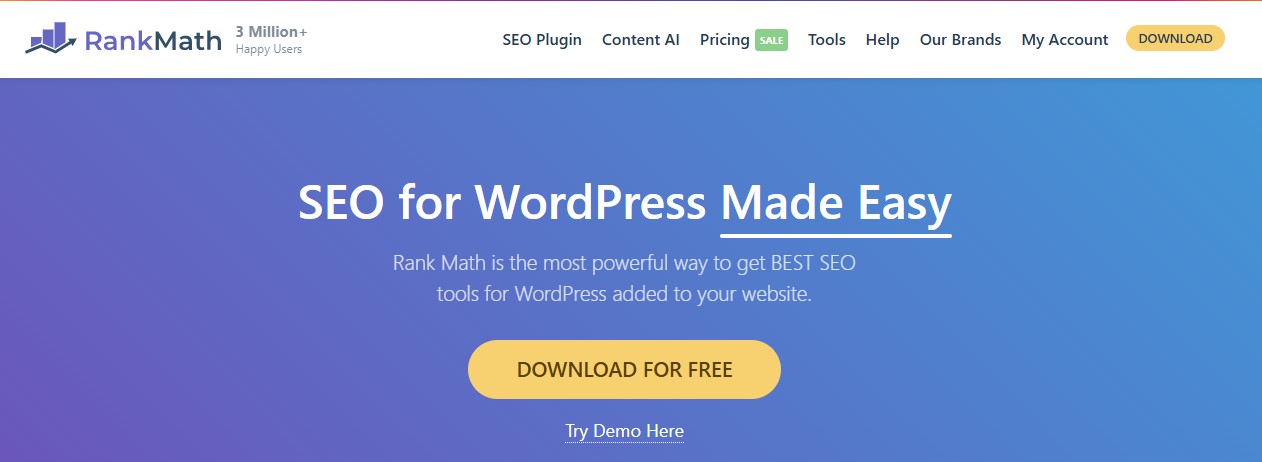
Rank Math has quickly become one of the most popular SEO plugins in 2026, combining user-friendly design with powerful, AI-driven SEO analysis. Its modern dashboard is intuitive, providing actionable recommendations without overwhelming users. Rank Math is particularly praised for offering many advanced features for free that other plugins reserve for premium plans, making it ideal for bloggers, businesses, and eCommerce websites looking to optimize SEO efficiently.
Key Features
- Built-in Google Schema Markup for rich snippets and structured data
- Advanced on-page SEO analysis and suggestions
- Multiple keyword optimization per post or page
- WooCommerce SEO integration for online stores
- Google Analytics and Google Search Console integration
- XML sitemap generation and automatic updates
- Internal linking suggestions with automation options
- 404 monitor and redirection manager
Pros
- Supports multiple keywords even in the free version
- Highly intuitive, modern interface suitable for beginners and pros
- Offers many advanced features without a paid plan
- Lightweight and modular design keeps sites fast
Cons
- Initial setup can be overwhelming due to the range of options
- Not as long-established as Yoast or AIOSEO, so fewer case studies exist
4. SEOPress
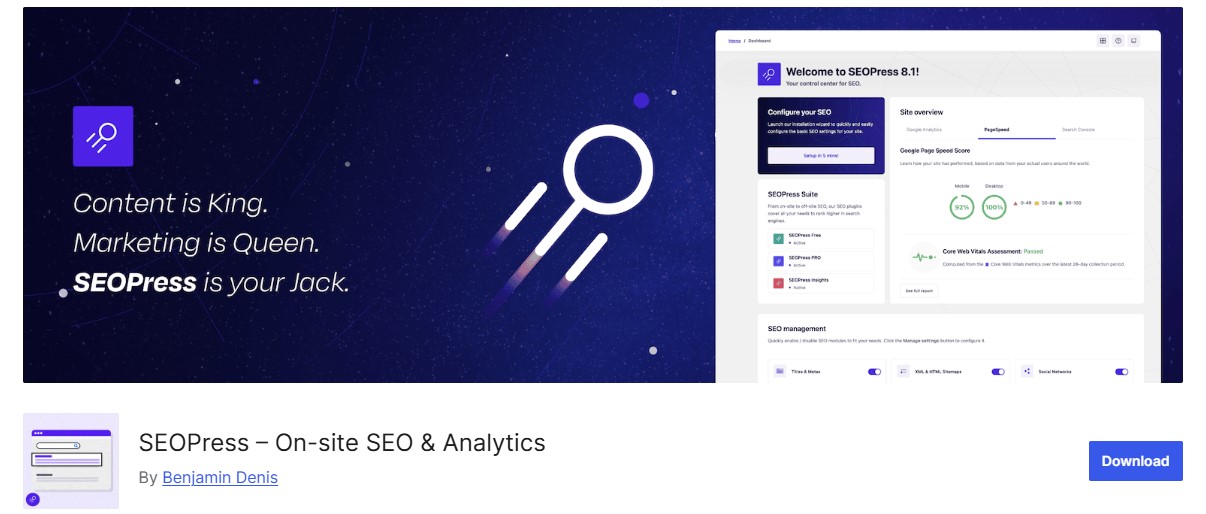
SEOPress is a versatile and growing SEO plugin known for its clean, ad-free interface, making it appealing for users who want a clutter-free WordPress experience. In 2026, SEOPress continues to offer a full suite of SEO tools comparable to Yoast and AIOSEO, including content analysis, schema support, and local SEO. It’s also highly flexible for agencies and developers thanks to its white-label and advanced customization options.
Key Features
- On-page SEO and content analysis tools
- XML and HTML sitemap generation and updates
- Local SEO features for targeting geographic searches
- Google Analytics integration with custom tracking options
- WooCommerce SEO support for product optimization
- Redirect management for 301, 302, and 307 redirects
- Structured data and schema support, including FAQs, articles, and events
- Social media meta management (Facebook, Twitter, LinkedIn)
- White-label option for agencies and clients
Pros
- Completely ad-free, providing a clean dashboard experience
- White-label capabilities make it ideal for agencies
- Premium version offers excellent value with advanced features
- Lightweight, fast, and easy to configure
Cons
- Free version is limited compared to competitors
- Smaller user community means support and tutorials may be less extensive
Also Read: The Best Currency Converter Plugins for WordPress in 2026
5. The SEO Framework

The SEO Framework is a clean, fast, and automated SEO plugin designed for users who prefer minimal setup and a lightweight interface. Ideal for developers, minimalists, and performance-focused site owners, it focuses on providing automated SEO recommendations that just work without constant monitoring. In 2026, it also incorporates AI-driven content analysis and structured data support to help sites stay aligned with modern SEO standards.
Key Features
- Automated SEO optimization for posts, pages, and custom post types
- Local SEO features for geographically targeted searches
- AI-driven content analysis for improved keyword and readability guidance
- Integrated structured data and schema support
- Meta description and title management
- Canonical URL setup to prevent duplicate content issues
- Lightweight and performance-focused, with minimal server load
Pros
- Extremely lightweight and fast, ideal for performance-focused sites
- Privacy-focused and GDPR-compliant
- Highly automated, requiring minimal manual configuration
Cons
- Limited support resources for beginners
- Fewer third-party integrations compared to larger plugins
6. WP Meta SEO
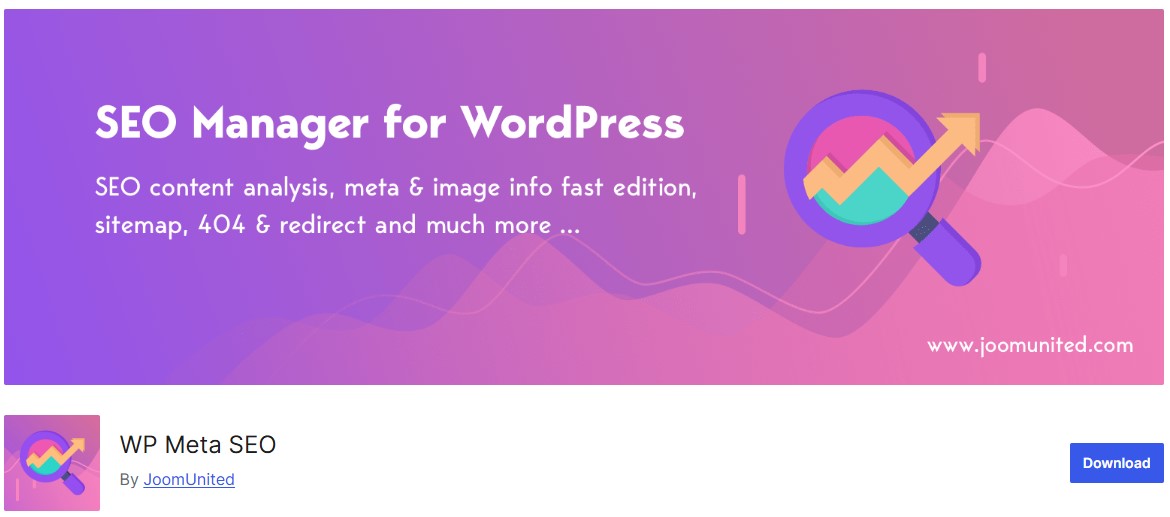
WP Meta SEO is designed for users who want full control over metadata and bulk SEO management. Its strength lies in helping site owners quickly optimize titles, meta descriptions, and other SEO elements across the website. In 2026, WP Meta SEO also integrates analytics and content monitoring to ensure ongoing optimization.
Key Features
- Bulk editing of meta titles, descriptions, and alt tags
- Broken link checker for maintaining site health
- Google Analytics integration for tracking SEO performance
- XML sitemap generation and updates
- Redirect manager for fixing broken URLs
- Image SEO optimization by editing alt attributes in bulk
- Compatibility with major page builders and themes
Pros
- Saves significant time with bulk editing tools
- Easy integration with Google Analytics for performance insights
- Helps maintain site health by monitoring broken links
Cons
- Free version is limited; many advanced tools require premium
- Interface can feel outdated compared to modern SEO plugins
7. Schema Pro

Schema Pro is a specialized plugin focused entirely on schema markup, helping websites stand out in search results with rich snippets. It complements other SEO plugins by automatically adding structured data to pages, posts, and products, improving search visibility and CTR.
Key Features
- Supports 20+ schema types including Article, Product, Review, FAQ, and Event
- Automatic schema markup without manual coding
- Compatible with most major SEO plugins
- Customizable schema for individual pages or post types
- Helps improve rich snippets in Google search results
Pros
- Easy to set up and use even for beginners
- Boosts search visibility with enhanced structured data
- Works alongside other SEO plugins without conflict
Cons
- Limited to schema markup functionality
- No free version; requires premium subscription
8. Squirrly SEO
Squirrly SEO is an AI-driven plugin designed to guide beginners through SEO in real-time. Unlike traditional plugins, it acts like a virtual SEO assistant, offering live suggestions as you write content, along with performance tracking and audit reports. This makes it ideal for content creators and small business owners who need hands-on guidance.
Key Features
- Live SEO assistant providing feedback while writing
- Keyword research and optimization suggestions
- Audit reports for website SEO health
- Performance analytics for tracking traffic, rankings, and user engagement
- AI-guided content improvements for search engines and readers
- Competitor analysis to benchmark against similar websites
Pros
- Beginner-friendly with real-time guidance
- AI-driven suggestions help improve content quality and SEO simultaneously
- Provides a structured approach for content optimization
Cons
- Can feel overwhelming for advanced users who prefer manual control
- Higher-tier plans can be expensive for small websites
9. Redirection
Redirection is a straightforward, lightweight plugin that focuses entirely on managing 301 redirects and 404 errors. It is essential for website maintenance, particularly for sites undergoing redesigns, migrations, or content updates.
Key Features
- Create and manage 301, 302, and 307 redirects
- Track 404 errors to fix broken links
- Conditional redirects based on user login status, referrer, or device type
- Log and monitor redirect activity for analysis
- Lightweight and free, with no unnecessary features
Pros
- Extremely easy to use, even for beginners
- Essential for fixing broken links and maintaining SEO health
- Free and reliable for all WordPress sites
Cons
- Limited strictly to redirection and 404 management
- Does not include other SEO features like metadata, schema, or content optimization
10. Broken Link Checker

Broken Link Checker is an essential WordPress plugin for maintaining site health and SEO in 2026. It automatically scans your website for broken links, missing images, and redirected URLs, helping you catch issues before they affect user experience or search rankings. By proactively identifying and fixing broken links, this plugin ensures that visitors can navigate your site smoothly and that search engines view your website as reliable and well-maintained.
Key Features
- Continuous monitoring of internal and external links
- Detects missing images and broken URLs across posts, pages, comments, and custom post types
- Bulk editing of links directly from the plugin dashboard
- Automatic notifications when broken links are found
- Option to prevent search engines from following broken links
- Redirect tracking to help manage moved content
- Customizable scan frequency and settings for performance optimization
- Integration with SEO plugins to maintain search engine health
Pros
- Improves user experience by ensuring all links work correctly
- Helps prevent 404 errors from harming SEO
- Saves time by automating the process of finding broken links
- Essential for content-heavy websites and eCommerce stores
Cons
- Can be resource-intensive on very large websites
- May slow down site performance during scans if not configured carefully
Also Read: 12 Best WooCommerce Order Management Plugins for Streamlined Sales in 2026
Comparison Table
| Plugin | Key Features | Best For | Pros | Cons |
|---|---|---|---|---|
| Yoast SEO | SEO analysis, XML sitemaps, social media integration | Beginners | User-friendly, comprehensive | Limited free version, complex premium |
| AIOSEO | Schema markup, link assistant, WooCommerce support | E-commerce sites | WooCommerce support, local SEO | Expensive premium, less intuitive |
| Rank Math | Multiple keywords, schema, advanced analytics | All user levels | Intuitive, powerful free version | Setup can be complex |
| SEOPress | Google Analytics, local SEO, white-label option | Agencies, privacy-focused | Ad-free, affordable premium | Limited free features |
| The SEO Framework | Automated SEO, local SEO, structured data | Developers, minimalists | Lightweight, automated | Not beginner-friendly |
| WP Meta SEO | Bulk editing, broken link checker, analytics | Content-heavy sites | Bulk editing, saves time | Outdated interface, limited features |
| Schema Pro | 20+ schema types, auto-markup | Boosting search visibility | Easy to use, structured data | Limited scope, no free version |
| Squirrly SEO | AI-driven analysis, audit reports | Beginners | Real-time feedback, AI guidance | Overwhelming for advanced users |
| Redirection | 301 redirects, 404 error tracking | Site maintenance | Free, easy to use | Limited to redirection |
| Broken Link Checker | Link monitoring, bulk editing | Site health | Improves UX, prevents 404s | Resource-heavy on large sites |

Final Thoughts
Choosing the right SEO plugin can make a major difference in your WordPress website’s visibility, traffic, and overall performance. For users seeking comprehensive, all-in-one solutions, Yoast SEO and AIOSEO provide extensive on-page optimization, content analysis, and sitemap management. Those who prefer advanced customization and modern AI-driven tools may find Rank Math and SEOPress ideal, offering flexible features, local SEO support, and performance-friendly designs.
For websites that prioritize technical SEO, Schema Pro and The SEO Framework provide powerful structured data, automation, and schema management to improve search results and rich snippet visibility. Meanwhile, Redirection and Broken Link Checker address niche but critical needs managing redirects, fixing broken links, and maintaining overall site health.
Interesting Reads
What’s a Bold New Font Style Used in WordPress?