Content Types That Drive Engagement in 2026


Updated August 2026. If there’s one thing years of running content calendars will teach you, it’s that people don’t consume information the same way. Some readers want a 2,000-word breakdown with sources cited. Others want the thirty-second version on their phone during a commute. A few just want the picture that says it all without a single sentence attached.
That’s why brands that are actually growing in 2026 don’t lean on one content format and hope for the best. With AI-written filler clogging every feed and readers getting sharper at spotting it, the brands pulling ahead are the ones mixing formats deliberately, matched to how their audience actually behaves, not just what’s trending this quarter. Below is a working breakdown of the content types earning attention right now, what each one is actually good for, and where each one falls short.
1. Blog Posts: Still the Anchor
Blogs get written off every couple of years as “dead,” and every couple of years they keep quietly driving the majority of organic traffic for the businesses that treat them seriously. They’re the format search engines can crawl, the format AI assistants pull from when they answer a question, and the format that lets you actually explain something instead of gesturing at it.
What’s changed for 2026 isn’t the format, it’s the bar. Generic 800-word posts that repeat what the top five Google results already say don’t get cited by AI Overviews and don’t hold a reader’s attention past the second paragraph. What does work: original data points, a specific opinion, a story from actually doing the thing you’re writing about. Google’s own search quality guidance has leaned toward “experience” signals for years now, and that’s not changing.
If you want the full framework for building a blog that actually supports a business goal instead of just filling a calendar, see How to Create a Content Marketing Strategy Step-by-Step.
2. Short-Form Video: Still the Attention Magnet
TikTok, Instagram Reels, YouTube Shorts, different apps, same underlying behavior: people scroll fast and stay only for what earns it in the first two seconds. That’s brutal for polish and great for authenticity. A shaky, unscripted clip of someone explaining a real mistake they made often outperforms a studio-shot ad, because it reads as true.
The mechanism behind why video performs isn’t mysterious. Faces and voices carry emotional information that text can’t. A viewer forms an impression of a brand’s tone, confidence, and honesty within a few seconds of watching someone talk, in a way that no paragraph of copy replicates. That’s worth remembering before defaulting to text for everything.
Formats worth testing beyond the obvious tutorial: a founder answering a question they got in the DMs that week, a customer walking through how they actually use the product, a behind-the-scenes look at a mistake getting fixed. None of that needs a production budget. It needs a phone and a willingness to be unpolished on purpose.
3. Infographics: Underrated for Reach, Not Just Reading
Infographics get dismissed as an old-school tactic, which misses why they still work. Not everyone has three minutes to read a post, but almost everyone will glance at a well-designed visual that answers their question in five seconds. That makes infographics a strong fit for social feeds, for embedding inside longer posts, and for picking up backlinks from other sites that want a visual to illustrate their own point.
The mistake most brands make with infographics is cramming too much into one image. The ones that actually get shared and linked usually answer a single question clearly: one comparison, one process, one set of stats. Save the nuance for the blog post underneath it.
4. Podcasts: Slow Build, Real Loyalty
Podcasts don’t spike the way a viral video can, but they build something video rarely does: sustained, undivided attention over twenty, thirty, sometimes sixty minutes. Someone listening to a podcast while driving or doing dishes isn’t scrolling past you in two seconds. They’re with you for the whole thing, which is a different kind of relationship than a feed impression.
That makes podcasts particularly good for two things: expert interviews that build authority by association, and long-form brand storytelling that would feel exhausting as a wall of text but works fine as conversation. The tradeoff is production time and the fact that growth is genuinely slow. Most podcasts don’t find real traction until well past episode twenty. Go in expecting a marathon, not a launch spike.
5. Case Studies: The Proof Format
Nothing in a marketing deck matters as much as a specific example of the thing working. A case study that names the starting point, the change made, and the result gives a prospect something to believe in that a features list never will, particularly in B2B, where a purchase decision often has to survive being defended to a boss or a committee.
As an illustrative example of the kind of structure that tends to work: imagine a mid-sized SaaS company that noticed its trial-to-paid conversion had been flat for two quarters. Instead of publishing a generic “how we help customers” page, they wrote up one specific account: the exact objection the buyer raised, the specific feature that resolved it, and the timeline from trial to renewal. That kind of specificity, real name and numbers when you have them, or clearly labeled as an illustrative composite when you don’t, is what separates a case study that gets read from one that gets skimmed and closed.
6. Email Newsletters: The Channel You Actually Own
Social platforms can change their algorithm overnight and cut your reach in half without warning. Your email list can’t be de-ranked by anyone but you. That alone makes it worth treating as more than an afterthought.
The newsletters that keep people opening month after month don’t read like ads. They read like an update from someone the reader already trusts, useful on its own even if there’s nothing to buy this week. Save the pitch for maybe one email in five. The other four should be worth opening on their own merits.
7. Interactive Content: Participation Beats Consumption
Quizzes, polls, calculators, assessment tools. What they have in common is that the reader isn’t just receiving information, they’re generating it about themselves, which is inherently more engaging than passive reading. A “what’s your marketing maturity score” quiz gets shared in a way a blog post with the same information rarely does, because the result feels personal.
Interactive formats also tend to keep visitors on a page longer, which search engines read as a positive signal, and they generate first-party data on what your audience actually cares about, which is worth more than most third-party analytics dashboards these days.
8. User-Generated Content: The Trust Multiplier
As AI-generated marketing copy gets harder to distinguish from the real thing, audiences have gotten more suspicious of anything that sounds too polished. That’s exactly why a customer’s unscripted photo, review, or testimonial video now carries more weight than a brand’s own polished asset. It’s proof a real person, with no reason to lie, had a real experience.
The brands doing this well aren’t just hoping customers post organically. They’re asking directly, in a follow-up email, in an SMS after delivery, sometimes with a small incentive attached. A little structure turns an occasional happy accident into a repeatable content source.
9. Community and Live Formats: The Fastest-Growing Category
This one didn’t make most “content types” lists even two years ago. Reddit threads, Discord servers, LinkedIn live sessions, and X Spaces have become genuine discovery channels, not just engagement add-ons. Google now surfaces Reddit discussions prominently in search results for a huge range of queries, and AI assistants pull from community discussions when a topic calls for a real opinion rather than a marketing summary.
Showing up here means participating as a person, not posting a link and leaving. A genuinely useful comment in a relevant thread, with no pitch attached, tends to do more for long-term trust than a dozen promotional posts. It’s slower, and it doesn’t scale the way a scheduled post does, but the credibility it builds is hard to buy any other way.
How to Choose the Right Content Type
The mistake isn’t picking the “wrong” format, it’s trying to do everything at once with no clear priority. A more useful starting question is what stage your audience is actually in:
- Launching a new brand with no audience yet? Start with blog posts for search visibility and short-form video for reach. Both compound over time in ways a one-off campaign doesn’t.
- Have traffic but weak trust? Case studies, testimonials, and UGC do more to close that gap than another blog post will.
- Have an audience but low engagement? Interactive content and community participation tend to move that number faster than more polished output.
- Have engagement but weak retention? Email and podcasts are built for staying power in a way that feed-based content rarely is.
Every format decision should trace back to your content marketing strategy, not the other way around. Chasing a format because it’s trending, without a clear reason it serves your specific goal, is how content calendars turn into busywork.
Full framework here: How to Create a Content Marketing Strategy Step-by-Step
Distribute Smarter, Not Harder
Creating strong content and stopping there is one of the most common and most avoidable mistakes in content marketing. The brands that get outsized results from a modest content budget are almost always the ones that repurpose aggressively: one well-researched blog post becomes a short video script, three social posts, a newsletter section, and a slide for a sales deck. Same core idea, five different entry points, at a fraction of the production cost of creating five separate pieces from scratch.
Full breakdown of channel strategy: Best Content Distribution Strategies to Boost Reach
What to Actually Track
Vanity metrics like raw impressions or follower counts feel good and tell you almost nothing about whether content is working. A more honest scorecard, format by format, looks something like: blog posts on organic traffic and time on page, video on watch-through rate rather than just views, email on click rate rather than just opens, and case studies on whether sales actually references them in real conversations. If your sales team has never mentioned a piece of content to a prospect, it’s worth asking why it exists.
Common Mistakes That Undercut Otherwise Good Content
A few patterns show up again and again in accounts that struggle to get traction despite putting in real effort:
Publishing everywhere at a mediocre level instead of a few places at a high one. Spreading a small team across six platforms usually produces six mediocre presences instead of two strong ones. Audiences can tell the difference between content made for their platform and content dumped there because a calendar said to.
Treating every format like it needs the same message. A LinkedIn post, an email, and a TikTok script shouldn’t read like the same paragraph reformatted three ways. Each platform has its own rhythm, and content that ignores that rhythm reads as an ad even when it isn’t trying to be one.
No clear owner for repurposing. A lot of teams create one flagship piece a month and never turn it into anything else, not from lack of ideas but from lack of a defined process. Repurposing needs to be a step in the workflow, not an afterthought someone gets to “if there’s time.”
Optimizing for the metric that’s easiest to see instead of the one that matters. Follower count and impressions are easy to check and easy to feel good about. Pipeline influenced, assisted conversions, and whether sales actually uses the content are harder to track and far more honest about whether the strategy is working.
Budgeting Time and Resources Across Formats
Most teams don’t have unlimited production capacity, so format selection is really a resource allocation question in disguise. A rough starting split that works for a lot of small-to-midsize teams: put the majority of consistent effort into one or two “anchor” formats that compound over time, blog and email are the classic pair, then treat everything else as repurposed output from that anchor rather than a separate content stream that needs its own idea generation from scratch.
That single shift, treating video, social posts, and infographics as downstream of a core piece rather than parallel projects, is usually what separates teams that keep a consistent publishing rhythm from teams that burn out after two months and go quiet. Consistency beats intensity almost every time content performance gets measured over a full year instead of a single campaign.
Frequently Asked Questions
Which content type drives the most engagement in 2026?
Short-form video still leads on raw engagement metrics, but the highest return usually comes from a blended approach: video for reach, blogs for search visibility and long-term compounding traffic, and email for retention once someone’s already interested. Community and interactive formats have grown fastest as a category over the past year.
Is blogging still worth it in 2026 with AI Overviews everywhere?
Yes, with a sharper bar than a few years ago. Posts built on original data, direct experience, and a clear point of view get cited inside AI Overviews and Perplexity answers. Generic, rephrased content gets filtered out more aggressively than ever, so originality now matters more than publishing frequency.
How many content formats should a small brand realistically maintain?
Two or three that can be produced consistently, most often a blog plus short video plus a newsletter. Get those into a reliable rhythm before adding podcasts, infographics, or interactive tools. A format published sporadically does less for a brand than a narrower set published reliably.
Should every brand be active in community spaces like Reddit or Discord?
Not every brand needs a Discord server, but almost every brand benefits from monitoring the Reddit and forum threads where its category gets discussed, and occasionally contributing something genuinely useful. It costs time, not budget, and the trust it builds compounds in a way ads don’t.
What Changes When AI Search Is in the Mix
One shift worth planning around directly: a growing share of research now happens inside an AI assistant instead of a traditional search results page. That changes what “good content” needs to do. It’s no longer enough to rank; the content needs to be structured clearly enough, with direct answers near the top, explicit headings, and genuine specificity, that a language model can extract and cite it accurately.
Practically, that means front-loading the direct answer to a likely question before the supporting explanation, using headings that match how someone would actually phrase a question, and resisting the urge to bury the useful part three paragraphs into a preamble. Content written to be skimmed by a human and content written to be parsed by an AI system turn out to want a lot of the same things: clarity, structure, and a straight answer before the caveats.
Final Thoughts
The strongest content strategy in 2026 isn’t the one chasing every new format the moment it trends. It’s the one that picks a deliberate mix, matched to where the audience actually is and what the business actually needs, and executes that mix consistently enough for it to compound. Start with one format done well, learn what your specific audience responds to, then expand from there. Format matters less than whether the format is telling the truth about what your brand actually does.
Go back to the full guide: Content Marketing: The Complete 2026 Guide to Build Trust, Traffic, and Brand Growth
Interesting Read
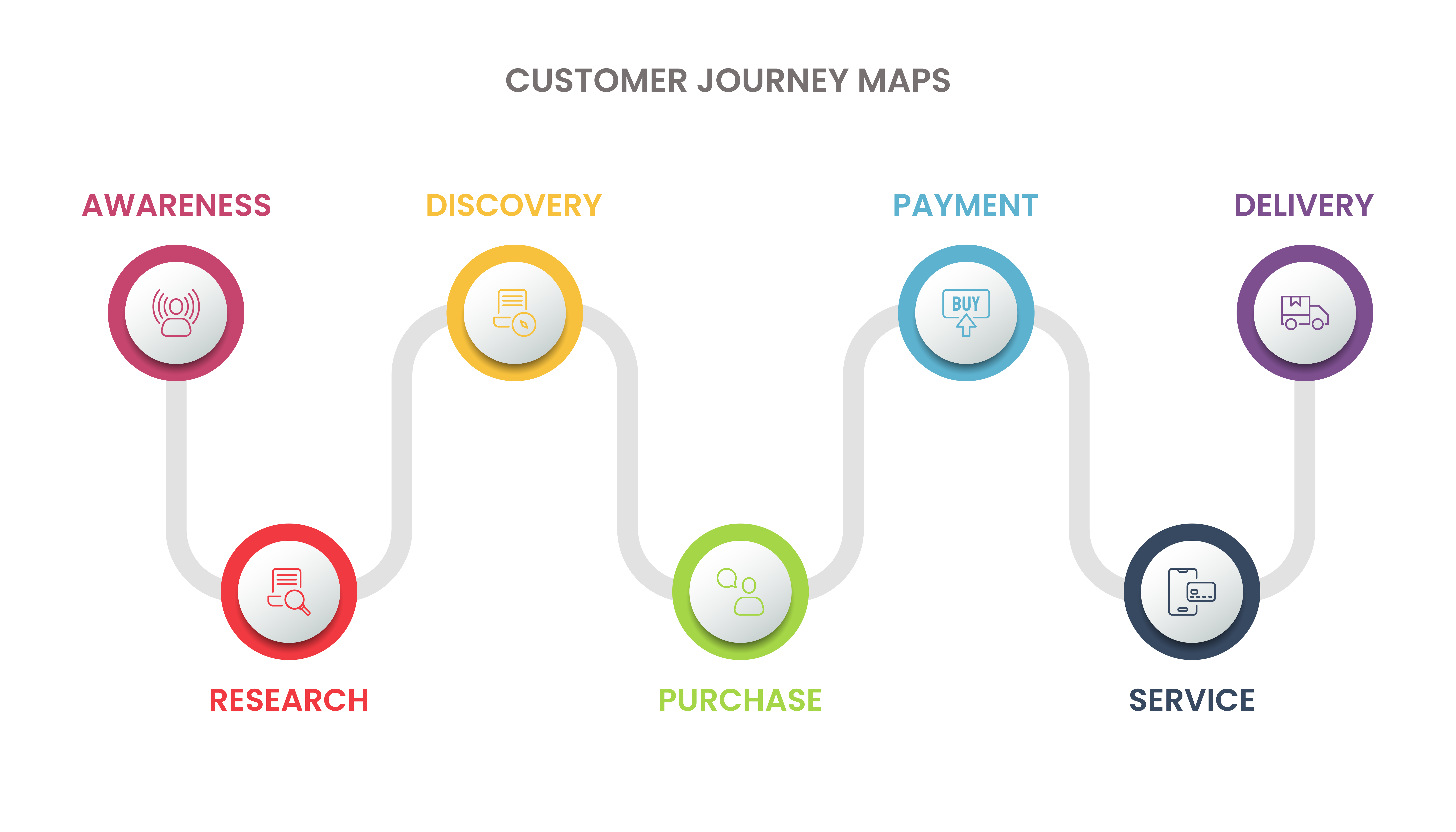
Real-World Examples of Customer Journey Maps