What is a Customer Journey Map?

When I first started learning about marketing strategy, I thought success came down to catchy campaigns, strong branding, and a good product. The more brands I worked with, the more that belief cracked. Even a genuinely well-built product can fail if nobody understands how a real person actually experiences it. That’s when I ran into customer journey mapping, and it changed how I think about business and storytelling in a way few frameworks have. It’s not a marketing exercise you check off a list. It’s a way of seeing your brand through your customer’s eyes, one step, one emotion, one decision at a time.
Defining a Customer Journey Map
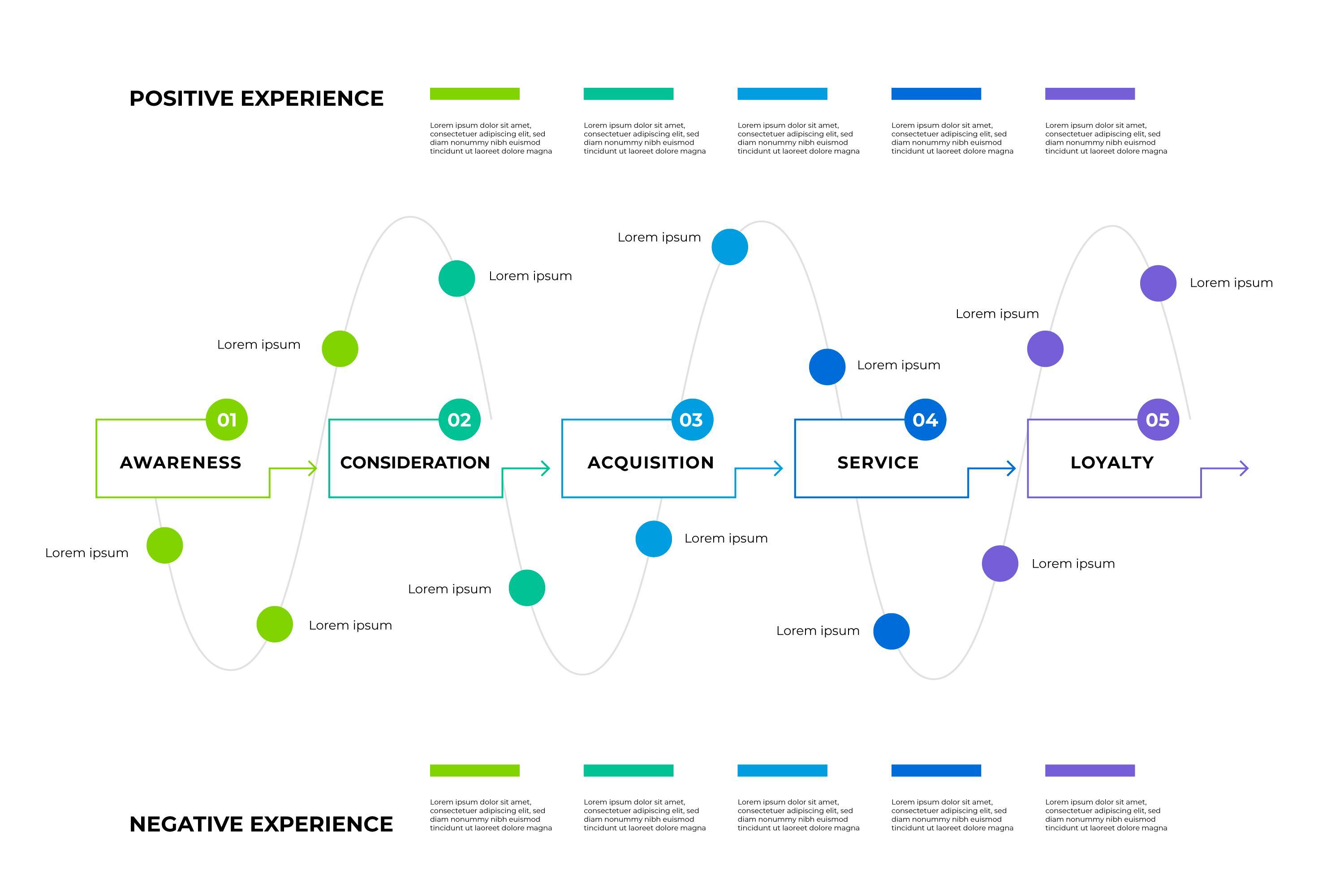
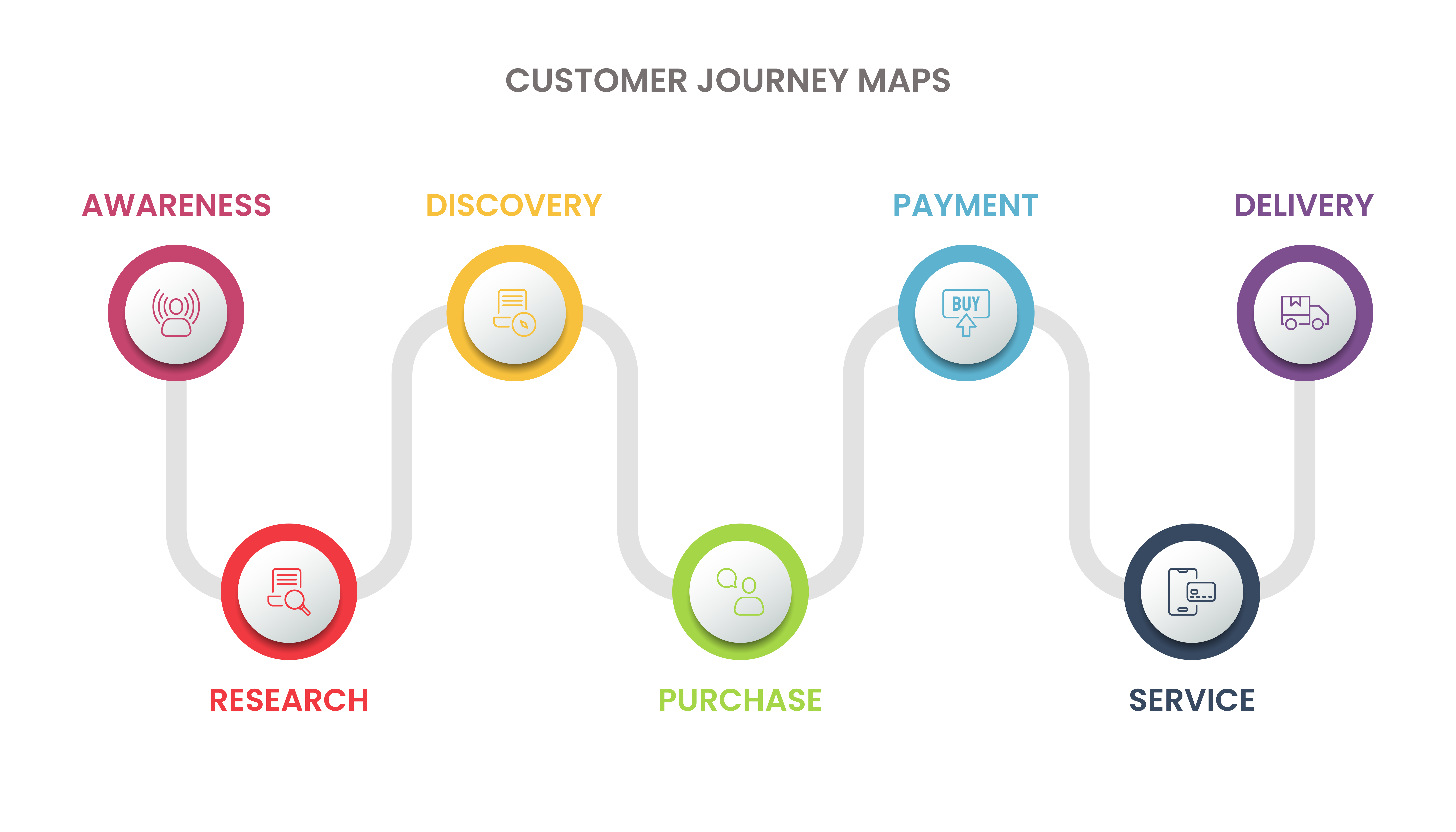
A customer journey map is a visual representation of the full path a customer takes: from the first moment they hear about your brand, through research and purchase, all the way through post-purchase moments like support, reviews, and referrals.
It captures more than what people do. It captures how they feel and why they make the decisions they make along the way.
The simplest way I’ve found to describe it: it’s like turning your customer’s experience into a movie, where every scene, every emotion, and every action matters to the plot.
If you’ve ever wondered why customers abandon a cart right before checkout, or what actually keeps your best clients coming back, a journey map tends to answer both in one clear, visual story instead of a dozen disconnected reports.
Before going deeper, it’s worth understanding how the concept evolved: The Evolution of the Customer Journey Map, since knowing its history makes its current relevance easier to appreciate.
Why I Believe Every Brand Needs One
The first time I built a real journey map, it was genuinely eye-opening. Small gaps I’d never paid attention to before suddenly stood out: a broken link buried in a confirmation email, confusing copy on a pricing page, no personal thank-you after a purchase went through.
None of those sound dramatic in isolation. But to a customer living through them, they’re small emotional turning points that add up.
A properly built journey map does a few specific things:
- Shows your business from the customer’s actual viewpoint, not the internal one your team defaults to.
- Surfaces the exact moments of frustration, hesitation, and delight, rather than vague guesses about them.
- Clarifies what emotions are driving decisions at each individual stage.
- Reveals concrete opportunities to improve loyalty and lifetime value, not just abstract “customer satisfaction.”
For me personally, journey mapping shifted the underlying question from “how do I sell more?” to “how do I help my customers actually succeed with me?” That’s a small phrase change on paper. In practice, it reshaped almost every decision that followed.
I go deeper into the emotional and business case for doing this in Benefits of Customer Journey Mapping.
The Structure of a Journey Map
Every customer journey map has a handful of core layers. Think of them as the underlying DNA of the customer experience.

Customer Persona
Start with who your customer actually is, not just their age or job title, but their motivations, frustrations, and goals. I often give a persona a name and a short backstory, something like “Priya, the new business owner” or “Raj, the busy freelancer.” It sounds almost too simple, but naming a persona makes it noticeably easier to visualize how they’d actually react to a given moment.
For more on what makes a solid journey structure, see Components of a Customer Journey Map.
Phases or Stages
These are the steps a customer moves through. Most maps land on some version of:
- Awareness
- Consideration
- Purchase
- Retention
- Advocacy
Each stage carries its own mindset. In awareness, the customer is curious but noncommittal. In purchase, they’re weighing caution against excitement. In retention, they’re quietly evaluating whether trust was well placed.
Touchpoints
Every interaction a customer has with your brand counts as a touchpoint, whether that’s your website, a social post, an ad, a support conversation, or word-of-mouth from someone they trust. Mapping these out often reveals gaps nobody had noticed, because no single department owns the full list.
Customer Thoughts and Emotions
This is where the real insight tends to live. I try to write down what my customer is actually thinking or feeling at each stage, in their own likely words. A rough example:
- Awareness: “This looks interesting.”
- Purchase: “Can I trust this company?”
- Retention: “Was this actually worth my money?”
Pain Points and Opportunities
Once the emotional layer is mapped, the places where a customer struggles, and the places where a small improvement would matter most, tend to become obvious. Seeing all of this laid out together is a bit like zooming out from individual trees to see the whole forest.
Journey Mapping Versus Funnel Analysis
It’s worth being clear about how a journey map differs from a sales or marketing funnel, since the two get confused constantly and used interchangeably in ways that muddy both. A funnel is a quantitative view: a set of numbers showing how many people moved from one stage to the next, and where the biggest percentage drop-off happened. A journey map is a qualitative view: why those people dropped off, what they were thinking and feeling at that exact moment, and what specifically would have kept them moving forward.
The two are genuinely complementary rather than competing. A funnel tells you where to look. A journey map tells you what you’re actually looking at once you get there. Teams that only track funnel metrics tend to know that something’s broken at checkout, for instance, without ever understanding why, which is exactly the gap journey mapping is built to close.
A Real Example From My Work
I once worked with a small e-commerce brand selling handmade skincare products. Sales were healthy, but retention was quietly slipping.
Building a journey map surfaced something the team hadn’t clocked: customers were genuinely happy with product quality, but felt abandoned right after checkout. No follow-up emails, no usage guidance, no post-purchase engagement of any kind.
The fix was modest: a gentle follow-up sequence, an email three days after purchase with a personal thank-you note and a short “how to use this” guide.
Within a month, repeat purchase rates climbed noticeably, and reviews started coming in unprompted. That single journey map turned quiet confusion into clarity, and occasional buyers into people who kept coming back.
This connects directly to Steps to Creating a Customer Journey Map, where I lay out how to build one that actually produces results like this instead of sitting in a folder unused.
What Makes a Customer Journey Map Powerful
The diagram itself isn’t where the value sits. The value is in the conversation it forces inside your team. When marketing, sales, design, and support all look at the same journey side by side, everyone aligns around the customer instead of debating from separate, siloed assumptions. Arguments about opinion give way to decisions grounded in shared, visible evidence.
It also shifts a team from reactive to proactive. Instead of responding to complaints after they happen, you start predicting friction before it occurs. That’s why I don’t treat journey mapping as a one-time workshop exercise. It works better as an ongoing habit of empathy and iteration, revisited every time something in the business changes.
Common Mistakes That Undercut a Journey Map
A few patterns show up repeatedly in teams that build a map and then get little value out of it:
Building it once and never updating it. A journey map reflects a snapshot of behavior at a specific moment. Pricing changes, new competitors, and shifting expectations all move the map underneath you if it’s never revisited.
Guessing at emotions instead of asking. The most useful maps are informed by actual customer interviews, support transcripts, and survey data, not just what the internal team assumes a customer probably feels.
Mapping only the happy path. The moments where things go wrong, a failed payment, a delayed shipment, a confusing return process, usually reveal more valuable opportunities than the smooth, ideal version of the journey most teams default to mapping first.
No owner after the workshop ends. A journey map that nobody is responsible for maintaining tends to get built once, presented in a meeting, and then quietly forgotten. Assigning ongoing ownership is what keeps it a living tool instead of a one-time artifact.
How Journey Maps Differ Across Business Types
A subscription SaaS business, a one-time-purchase e-commerce brand, and a service-based agency all have meaningfully different journeys, even if the five-stage framework looks identical on paper. A subscription business lives or dies on the retention and advocacy stages, since a single purchase decision barely matters if renewal churns out six months later. A one-time e-commerce purchase puts far more weight on the awareness and consideration stages, since there’s often no second chance to convert the same customer through the same channel. A service-based agency tends to have a much longer consideration stage, involving multiple stakeholders and a trust-building process that a simple product page can’t replicate.
Applying a generic journey map template without adjusting for which of these categories your business actually falls into is one of the more common reasons a mapping exercise produces generic, low-value insights instead of something a team can actually act on.
Where the Data Actually Comes From
The weakest journey maps I’ve seen were built entirely from a conference room, with no input from anyone who’d actually talked to a customer that month. The strongest ones pull from several sources at once, and none of them require an expensive research budget to gather:
Support ticket transcripts. Reading through a month of actual support conversations surfaces exact language customers use to describe their frustration, which is worth more than a paraphrased assumption.
Sales call recordings or notes. Whatever objections come up repeatedly in sales conversations are almost always live pain points somewhere earlier in the journey that never got resolved.
Website and funnel analytics. Drop-off points in a checkout flow or signup form tell you exactly where friction exists, even before you know why.
Direct customer interviews. Even five or six short conversations with real customers, asked open-ended questions about their experience, tend to surface more nuance than any survey with multiple-choice answers.
Combining these sources rather than relying on just one avoids two opposite failure modes: a map built purely on anecdote (one loud complaint gets treated as universal) and a map built purely on aggregate data (real emotional texture gets lost in an average).
How I Present a Journey Map to Stakeholders
A beautifully designed journey map that nobody outside the marketing team ever sees isn’t worth the time it took to build. Getting genuine buy-in from other departments usually means presenting it differently depending on the audience.
For leadership, I lead with the business impact: which specific stage is losing the most customers, and what that’s likely costing in revenue terms. For product and engineering teams, I lead with the specific friction points, the broken link, the confusing form field, the missing confirmation, since those are concrete and actionable. For support and sales teams, I lead with the emotional language customers actually used, since that’s what resonates with people talking to customers every day.
The map itself doesn’t change. The entry point into the conversation does, and that’s usually the difference between a journey map that drives real change and one that gets nodded at politely and then filed away.
Tools Worth Using to Build One
You don’t need specialized software to get started, a whiteboard and sticky notes work fine for a first pass. But once a map needs to be shared, updated, and revisited regularly, dedicated tools tend to save real time: Miro and FigJam both work well for collaborative visual mapping across a distributed team, Smaply and UXPressia are built specifically for journey mapping with persona and emotion tracking baked in, and even a well-structured spreadsheet can work for a smaller team that just needs the stages, touchpoints, and pain points laid out clearly without much visual polish.
The tool matters far less than the discipline of actually keeping the map current. A gorgeous map from eighteen months ago that nobody’s touched since is less useful than a rough one updated last quarter.
How Often a Journey Map Should Be Revisited
There’s no fixed universal answer, but a reasonable default is a full review every six months, with lighter check-ins any time something structural changes: a new competitor enters the market, a pricing model shifts, a major feature launches, or support ticket volume around a specific stage spikes unexpectedly. Treating the map as a living document rather than a one-time deliverable is what keeps it accurate enough to actually inform decisions rather than just decorate a slide deck.
Frequently Asked Questions
How long does it take to build a first customer journey map?
A rough first version, covering the main stages and obvious pain points, can realistically be pulled together in a day or two using existing support tickets and analytics. A polished, well-researched version with direct customer interviews and validated emotional data usually takes two to four weeks, depending on how many stakeholders need to be interviewed along the way.
Does a small business actually need a formal journey map, or is that overkill?
The format can absolutely be lighter for a small team, a simple spreadsheet with stages and pain points listed out captures most of the value without needing dedicated software or a formal workshop. The underlying discipline, actually looking at the experience from the customer’s side rather than the business’s, matters regardless of company size.
Who should own the customer journey map inside a company?
There’s no single universal answer, but marketing or customer experience teams most commonly hold ownership, since they sit closest to both the data and the cross-functional relationships needed to keep it updated. What matters more than which department owns it is that someone is explicitly responsible, otherwise it tends to get built once and forgotten.
What’s the biggest mistake companies make with their first journey map?
Mapping the journey the company wishes existed instead of the one that actually exists. It’s tempting to build an idealized version showing every touchpoint working exactly as intended, but that defeats the purpose. The value comes specifically from surfacing where reality diverges from the intended experience.
Can a journey map be wrong, or is it always subjective?
It can absolutely be wrong, and the most common way that happens is when it’s built purely from internal assumptions rather than actual customer input. A journey map grounded in real support transcripts, interviews, and analytics is a defensible representation of reality. One built entirely in a conference room based on what the team assumes customers feel is closer to fiction dressed up as research, and it’s worth being honest about which one you’ve actually built before presenting it as fact.
My Takeaway
If I had to sum up what a customer journey map really is, I’d put it this way: it’s a mirror that shows you what your customers actually experience, not what you assume they experience. Once that reflection is visible, it becomes possible to build something smoother, more human, and more meaningful at every step.
Doing this regularly didn’t just improve conversion numbers for me. It built stronger relationships. When you design around genuine empathy, customers stop just buying from you. They start believing in you. And that belief is what actually survives a competitor’s cheaper price or a flashier ad campaign, because it was never built on price or flash to begin with.
Next, I’ll break down one of the most common points of confusion: Customer Journey Map vs Buyer Journey Map, and why understanding the difference changes how you approach every campaign that follows.
Interesting read
https://woosellservices.com/top-software-for-local-seo/
https://woosellservices.com/woocommerce-wishlist-gift-card-plugins/
https://woosellservices.com/woocommerce-remarketing-cart-abandonment-plugins/