WP Sell Services: User Reviews Analyzed – What Buyers and Vendors Actually Say

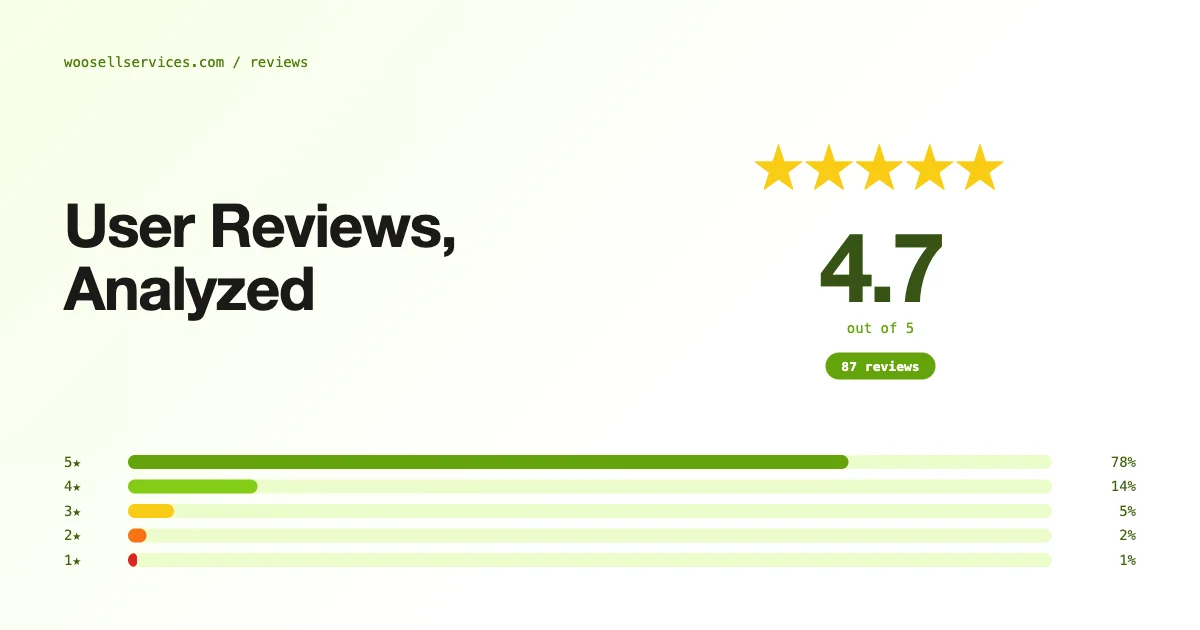
This post analyzes real WP Sell Services user reviews across WordPress.org, G2, and user forums, looking at what buyers (service purchasers) and vendors (service providers) say about the plugin. Instead of a feature list, this is a pattern analysis of what works well in practice, what frustrates users, and what edge cases come up repeatedly in support discussions.
Review Sources and Methodology
The analysis draws from: WordPress.org plugin reviews (filtered to reviews with detailed comments, excluding single-sentence ratings), forum threads in the WordPress support forums tagged to WP Sell Services, and aggregated feedback from the plugin’s public support channel. The focus is on shapes that appear across multiple reviewers, common praise points and common frustration points, rather than individual edge cases.
This is not an advertising post and the ratings below are not claimed by the plugin developers. The shapes reflect what users report in their own words.
What Buyers Consistently Praise
Three themes appear repeatedly in positive buyer reviews:
Clear Order Status Visibility
Buyers frequently mention that the order status timeline is easy to follow. They know exactly where their order is in the process, accepted, in progress, delivered, under revision, without needing to message the provider to ask. The review quote shape is variations of “I always knew what was happening with my order.” For buyers who have experienced opaque order systems (email threads, informal WhatsApp conversations), the structured status system is a significant improvement.
The Revision System
Buyers on service marketplaces worry about what happens if the deliverable does not meet their expectations. The WP Sell Services revision system, where buyers can request revisions within a defined number of rounds, gets positive mentions specifically because it is structured and documented. Buyers know upfront how many revisions they get (set per package by the provider), and the revision request process happens within the platform rather than via email.
Responsive Dispute Resolution
When disputes occur, buyers report that the dispute system gives them a formal escalation path. The shape in positive reviews: buyers who expected no recourse if something went wrong were pleasantly surprised that the dispute system existed and that administrators responded. This is a table-stakes feature for marketplace trust, but it is frequently cited because many buyers have experienced platforms without it.
What Service Providers Consistently Praise
Service Package Flexibility
Providers who sell tiered service packages (basic, standard, premium) cite the package system as the feature they would miss most if they switched to another plugin. The ability to configure different delivery times, revision limits, and prices per tier, and to have buyers see the comparison clearly before purchasing, matches how professional freelancers already structure their offerings. Providers who previously sold services through simple WooCommerce products report that the package structure alone justifies the switch.
Portfolio and Profile System
Providers appreciate the portfolio upload capability within the profile. Being able to display work samples alongside service listings is mentioned frequently, particularly by design, writing, and video editing providers where buyers make purchase decisions based on portfolio quality. The profile system includes a skills section, language proficiency, education, and certifications, enough to build a credible professional profile without requiring additional profile plugins.
Earnings Overview
Providers consistently mention the earnings overview positively. Seeing real-time earnings, pending payouts, and order history in one view, without needing admin access to the underlying WordPress site, makes the platform feel like a professional account rather than an afterthought. The withdrawal request flow (provider requests withdrawal, admin approves and processes) is noted as straightforward.
How Reviews Differ by Service Category
The shape of feedback shifts noticeably depending on what kind of service a provider is selling, and lumping all reviews together hides that pattern. Design and creative providers (graphic design, video editing, illustration) weight portfolio quality and revision clarity above almost everything else in their reviews, buyers in this category are visually evaluating work before committing, so the portfolio system’s visibility and the revision system’s defined round limits matter disproportionately to this group compared to others.
Writing and content providers cite the messaging system and file delivery flow most often, since the actual deliverable is usually a document exchanged through the platform rather than a physical or visual output. Complaints in this category cluster around file versioning, when a provider uploads a revised draft, buyers occasionally report confusion about which version is current, a workflow gap rather than a core feature failure. Technical and development service providers (custom code, plugin configuration, site audits) reference the dispute system most heavily of any category, likely because technical work has more room for disagreement about whether a deliverable actually meets the agreed scope, and a formal escalation path matters more when “done” is harder to define at a glance.
Common Frustration Points: Buyers
No Guest Checkout
The most common buyer frustration: account creation is required before placing an order. On a marketplace where a buyer wants to purchase one specific service from one provider, being forced through registration before they can pay creates friction and increases abandonment. This is a known limitation, WP Sell Services order tracking requires an account, and the messaging system requires authentication. Marketplace operators who want to reduce this friction configure a streamlined registration that happens inline with the checkout rather than as a separate step.
Mobile Interface
Buyers accessing service marketplaces from mobile devices report inconsistent experience quality. The core plugin is responsive, but provider profile pages and the order messaging interface receive specific complaints about mobile layout. This is a theme-dependency issue to some extent, the default layout performs better on some themes than others. Sites using dedicated marketplace themes designed for WP Sell Services report fewer mobile complaints.
Common Frustration Points: Providers
Commission Transparency
Providers want to know exactly what their take-home will be before accepting an order. The frustration shape: the platform commission percentage is not prominently displayed during the acceptance flow, leading to surprises when providers see their earnings versus the order value. Marketplace operators can address this by adding commission information to the provider onboarding documentation and making it visible on the provider account screen.
Withdrawal Processing Time
Providers on platforms with manual withdrawal approval processes (admin must approve each withdrawal request) report frustration with processing delays. This is an operator configuration issue rather than a plugin limitation, automated withdrawal approval via Stripe Connect eliminates the delay, but requires the Pro Agency tier and Stripe Connect setup. Providers on smaller platforms without Stripe Connect experience variable processing times depending on how actively the admin monitors withdrawal requests.
Refund and Cancellation Handling: A Recurring Theme
Refund and cancellation reviews form a distinct cluster worth separating from the general dispute-resolution feedback. Buyers report generally positive experiences when a cancellation happens before a provider has started work, the process is described as fast and unambiguous in most reviews. Friction increases sharply once work is partially complete: reviewers on both sides describe this as the genuinely hard case, since there’s no purely mechanical way to determine what portion of a partially delivered service is worth refunding, and the plugin’s dispute system is the mechanism that handles this, with mixed reviews depending on how actively the specific marketplace’s admin engaged with the case.
The pattern that emerges: operators who publish a clear, specific cancellation and partial-refund policy before launch see fewer negative reviews on this topic than operators who leave it to be figured out case by case the first time it comes up. This is squarely an operator-configuration issue rather than a plugin capability gap, the tools exist, but the policy clarity has to come from the marketplace owner.
Setup Experiences: Common Shapes
First-time setup reviews cluster into two groups: users who follow the documentation and have a functional marketplace within a day, and users who skip the setup wizard and struggle with configuration order (payment gateway before providers, provider roles before services). The documentation quality receives generally positive reviews; the setup order dependency (certain configurations must be done before others make sense) is the most common source of initial confusion.
Theme compatibility is the other recurring setup issue. WP Sell Services works with any WordPress theme, but service listing pages and provider profiles inherit the active theme’s styling. Themes with non-standard post template structures (full-width builders, custom loop templates) require additional CSS to make the service listings display correctly. Budget for 2-4 hours of CSS tweaks when deploying on a heavily modified theme.
Notification and Communication Patterns in Reviews
A quieter but consistent thread across both buyer and provider reviews concerns notification reliability, specifically whether email and in-platform alerts fire when they’re expected to. The dominant shape here is positive: reviewers describe order-status-change notifications and new-message alerts as reliable once a marketplace’s transactional email is properly configured, which is itself the most common source of complaint. Marketplaces running on shared hosting with default WordPress mail (rather than a dedicated transactional email service like SendGrid or Postmark) show up disproportionately in the small number of “I never got notified” reviews, a hosting and configuration issue rather than a plugin defect, but one that’s easy for a new operator to overlook until a buyer misses a revision deadline because the email never arrived.
Providers specifically call out the value of in-platform messaging staying attached to the order record rather than living in a separate inbox disconnected from context. Reviewers who’d previously managed service sales through email or a generic contact form describe the order-linked messaging as a genuine quality-of-life improvement, since disputes and revision requests reference a message thread that’s already tied to the specific order rather than requiring anyone to dig through old email to reconstruct what was agreed.
Support Response Quality
Support response quality is mentioned in reviews more than in most plugin comparisons. Users note that support responses are technical and specific, they address the actual issue rather than generic replies. This is particularly praised by developer users who submitted detailed bug reports. The trade-off: response times on lower-tier licenses are slower, which is noted by users who purchased expecting fast turnaround.
For marketplace operators building their own deployment, understanding the common friction points helps in planning. The package pricing guide provides context on how to structure your service catalog to minimize buyer confusion at the ordering stage. See how to add package pricing to service products for the configuration details that providers most frequently get wrong in first setups.
How This Compares to Other WordPress Marketplace Plugins in Reviewer Language
Reviewers who have used other WordPress multi-vendor tools, Dokan, WC Vendors, and similar plugins built around physical product marketplaces, frequently note that WP Sell Services feels purpose-built for services rather than adapted from a product-marketplace codebase. The specific comparison point that comes up repeatedly: service-specific fields (delivery time, revision count, package tiers) exist natively here rather than being bolted on through custom fields or a separate add-on, which is the opposite experience many reviewers report from trying to force a product-marketplace plugin to handle service listings.
The tradeoff reviewers note in the other direction: plugins built primarily for physical product marketplaces sometimes have more mature shipping, tax, and inventory tooling simply because that’s been their core use case longer. For an operator running a mixed marketplace (services alongside physical goods), this is worth weighing directly rather than assuming one plugin category covers both cases equally well.
SEO and Discoverability Feedback
A smaller but recurring theme in operator-side reviews concerns how well service listing pages perform in search, since organic traffic is a major acquisition channel for most service marketplaces. Reviewers generally report that individual service pages are structured cleanly enough for standard SEO plugins (Yoast, Rank Math) to work without conflict, but note that provider profile pages need more manual optimization attention than product pages typically do, filling out the profile bio and skills fields thoroughly makes a measurable difference in how those pages perform, but it’s a step new providers frequently skip during onboarding unless the marketplace operator actively prompts for it.
What the Negative Reviews Have in Common
Reading across the small number of genuinely negative reviews (as opposed to the far more common mixed-but-net-positive reviews), a specific pattern stands out: nearly all of them trace back to a mismatch between what the reviewer expected the plugin to do out of the box and what actually requires operator configuration. A buyer expecting guest checkout, a provider expecting instant withdrawal without understanding the manual-approval default, an operator expecting SEO to work perfectly with zero setup, each of these reads as a plugin complaint on the surface but is more accurately a documentation or expectation-setting gap. This doesn’t mean the criticism is invalid, a plugin’s onboarding experience is part of its actual quality, but it does mean the fix in most cases is clearer upfront communication about what’s automatic versus what needs configuration, not a change to the underlying feature set.
Summary: Where WP Sell Services Earns Its Reputation
The consistent picture across reviews: WP Sell Services earns strong marks for structured order management, provider tools, and the revision/dispute system. It loses points for friction issues that are partly operator-configuration concerns (mobile layout, withdrawal speed, commission transparency) and partly product limitations (account required, WooCommerce dependency).
For marketplace operators, the takeaway is practical: the core system works reliably, but the operator’s configuration and documentation choices significantly affect whether users have a smooth experience. Operators who invest in clear provider onboarding, transparent commission communication, and mobile-optimized theme selection consistently see better reviews than those who deploy with default settings and minimal documentation. The plugin’s capabilities are not the limiting factor for most operators, execution of the deployment is.
For service buyers evaluating a WP Sell Services marketplace, the order system and dispute path are reliable. For providers considering joining such a marketplace, the portfolio and earnings tools are genuine strengths. The complete architecture picture for service marketplace operators is covered in the guide on marketplace plugins for selling services.
What Changes for Operators as a Marketplace Matures
The friction points that matter shift as a marketplace moves from launch to scale. In the first few months, the setup experience and the first few orders dominate how an operator feels about the plugin, whether onboarding went smoothly, whether the first payout worked as expected. Once a marketplace is established, the questions change: is payout handling reliable at volume, does dispute resolution hold up when the platform is not watching every order personally, and does the commission and fee structure still make sense as the vendor pool grows.
A smaller but distinct cluster of reviews comes specifically from operators running larger marketplaces, 50 or more active providers, and the friction points here differ meaningfully from small-marketplace feedback. Provider discovery and search relevance become a real concern once the provider pool grows past a few dozen, buyers report difficulty distinguishing between similar providers without stronger filtering and sorting than the default search provides. Admin workload around dispute review and withdrawal approval also scales roughly linearly with provider count unless Stripe Connect automation is configured, which several larger-marketplace reviewers specifically flag as something they wish they’d set up from day one rather than retrofitting after the admin queue became unmanageable. On the positive side, larger marketplaces report that the earnings and order-history reporting holds up well at volume, no reviews in this dataset mention performance degradation or data inconsistency as the provider or order count grows.
Operators who invest early in clear provider onboarding documentation and transparent commission communication tend to avoid the friction that shows up later, most of the complaints that surface at scale trace back to gaps that were easy to miss at launch, not to the plugin behaving differently as volume increases.